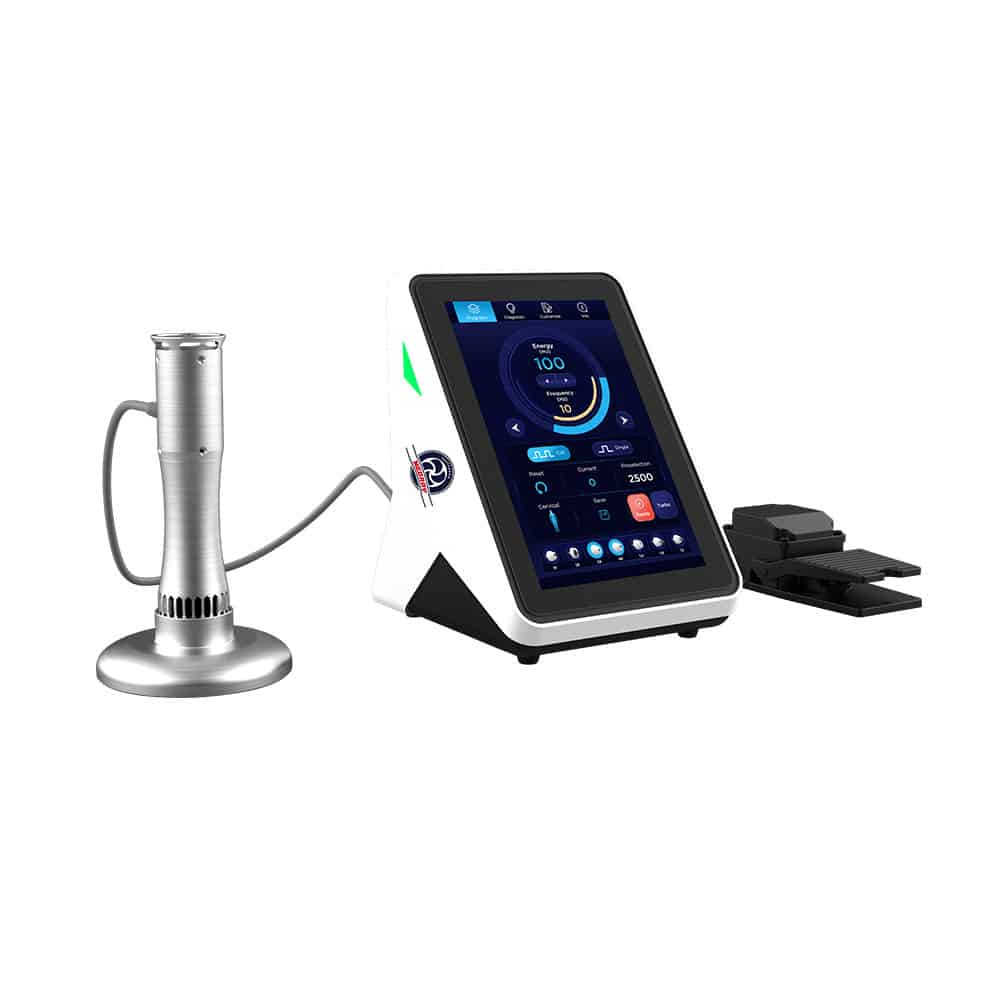
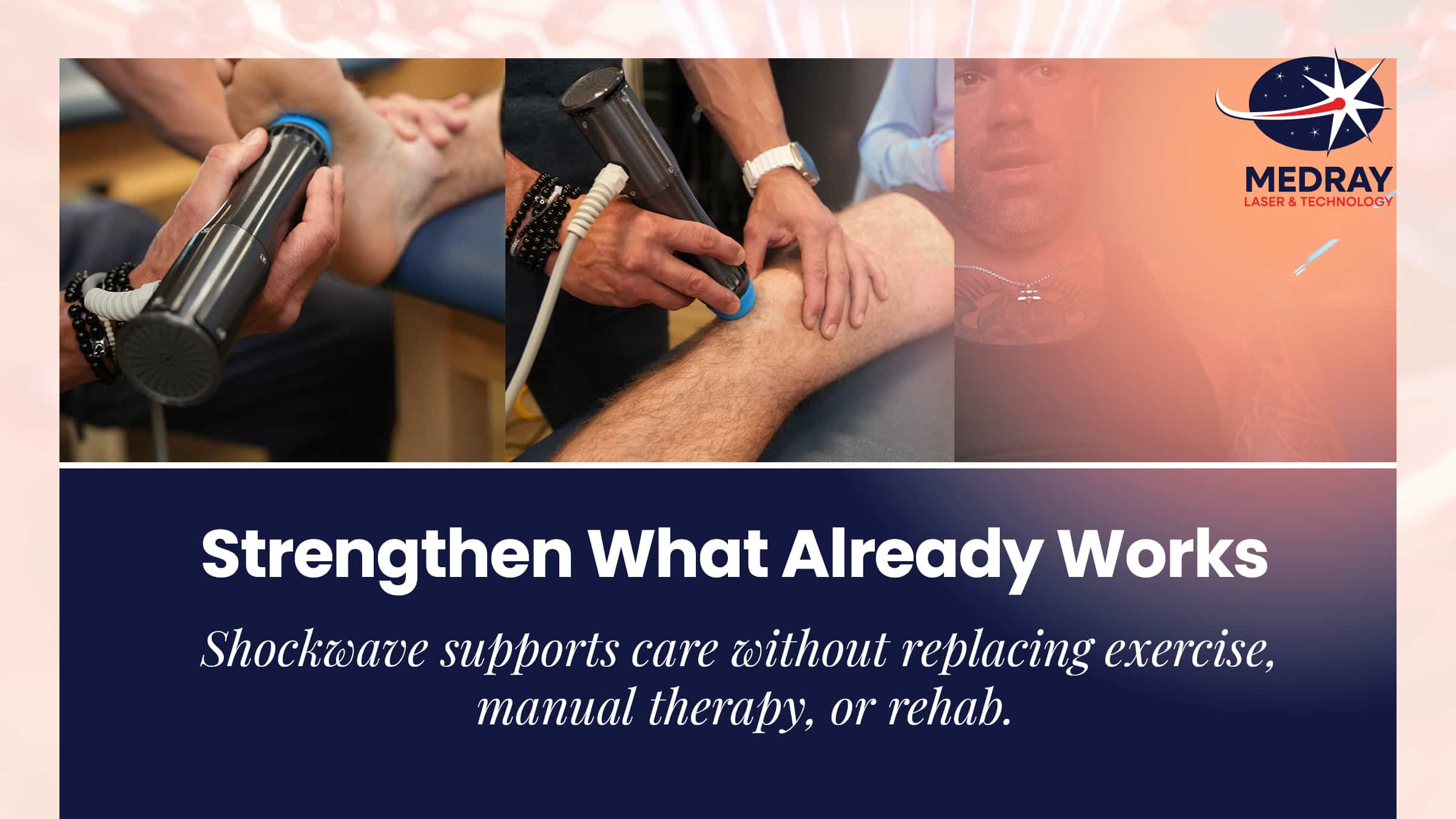
Not “Another Therapy”: How Shockwave Complements What You Already Do
In today’s outpatient clinical environment, adding a new modality often comes with a valid concern. Will it disrupt what is already working?
For many clinicians, that concern is what creates hesitation around shockwave therapy. There is a common assumption that introducing a new technology means replacing manual care, exercise, chiropractic treatment, or established rehabilitation strategies.
In practice, the opposite is often true.
When integrated appropriately, shockwave is not a replacement for what already works. It is an additional clinical input that may support the treatment plan already in place. For many providers, this becomes the most useful way to view it. Not as another therapy competing for time and attention, but as a modality that complements examination-driven care and helps strengthen overall outcomes.
Does Adding Shockwave Mean Replacing Existing Treatments?
No. In most outpatient settings, shockwave is layered into care rather than substituted for it. Clinicians who incorporate shockwave continue to rely on:
- Exercise prescription and progression
- Manual therapy techniques
- Chiropractic or joint-based care
- Movement-focused rehabilitation strategies
Shockwave becomes an added component that may help address specific barriers that slow progress.
Instead of asking what needs to be removed, a more practical question is this: Where could an additional tool help the current plan work more effectively?
What Role Does Shockwave Play in a Treatment Plan?
- Tissue sensitivity remains elevated
- Progress has slowed or plateaued
- Patients struggle to tolerate loading or movement
It does not replace clinical reasoning or foundational care. Instead, it may support those strategies by helping patients engage more effectively in the plan that is already in place.
When Might Shockwave Help Improve Outcomes?
Even when care is well structured and patients are compliant, some cases progress more slowly than expected. In these situations, shockwave may serve as an additional input that supports forward movement in care.
Commonly discussed applications in clinical settings include:
- Persistent soft tissue discomfort
- Tendon related presentations
- Plantar heel pain
- Elbow discomfort
- Shoulder calcific presentations
- Chronic low back related soft tissue sensitivity
These examples are frequently referenced in research and clinical discussion. They are not guarantees of outcome, but they highlight where clinicians often consider adding mechanical stimulation to support care.
In these cases, shockwave may help improve tolerance to movement and loading. This can allow patients to participate more fully in rehabilitation and maintain consistency with care.
For many clinicians, this is where shockwave becomes most valuable. Not as a primary treatment, but as a way to help the rest of the plan work more effectively.
How Does Shockwave Fit Into a Clinical Workflow?
One of the most practical advantages of shockwave is how easily it can fit into an existing visit structure.
Depending on the clinic, it may be used:
- Before exercise to improve tolerance
- After manual care to support tissue response
- As part of a coordinated treatment sequence
Because it does not require significant setup or restructuring, it can often be integrated without disrupting scheduling or patient flow.
This matters in busy outpatient environments. A modality may be clinically useful, but if it is difficult to implement or slows down the day, it is unlikely to be used consistently.
Shockwave’s flexibility makes it easier to adopt and sustain in daily practice.
Can Shockwave Improve Practice Efficiency?
- Reduce delays in patient progression
- Improve tolerance to loading earlier in care
- Support more consistent responses to treatment
How Does Shockwave Support a Modern Practice Model?
Patients today are often looking for care that feels both effective and up to date. Many are interested in non invasive and technology supported options.
Adding shockwave can help position a practice as:
- Evidence informed
- Adaptable in its approach
- Focused on offering a broader range of conservative care options
Does Shockwave Expand What a Clinic Can Offer?
It can.
When a modality integrates well with existing care, it may allow clinicians to approach a wider range of cases with confidence.
This may include patients with:
- Persistent soft tissue complaints
- Mechanically sensitive presentations
- Conditions that have not responded as expected elsewhere
This does not change the identity of the practice. It expands its capability.
It may also allow clinics to better serve patients who are seeking non surgical and non pharmacological options while still expecting a comprehensive approach to care.
What About the Financial Consideration?
It is appropriate to consider the financial side of any new technology. However, clinical value should remain the primary driver.
When a modality:
- Supports patient progression
- Improves the care experience
- Integrates smoothly into workflow
- Expands service offerings
It may naturally contribute to the business side of the practice.
This is not about adding a service for revenue alone. It is about strengthening the overall value of care.
What Is the Best Way to Think About Shockwave?
Shockwave is best understood as an addition to the clinical toolkit.
It is not a replacement for existing treatments. It does not compete with exercise, manual therapy, or chiropractic care. Instead, it complements them.
The more useful question is not whether shockwave is better than what you already do.
It is whether there are patients in your practice who could benefit from an additional non invasive input that supports the care you already provide.
For many clinics, the answer is yes.
The Bottom Line
- Support patient progression
- Improve workflow flexibility
- Expand clinical capability
- Strengthen the overall treatment experience
Explore our Class 4 Lasers and Shockwave Therapy Device
Laser
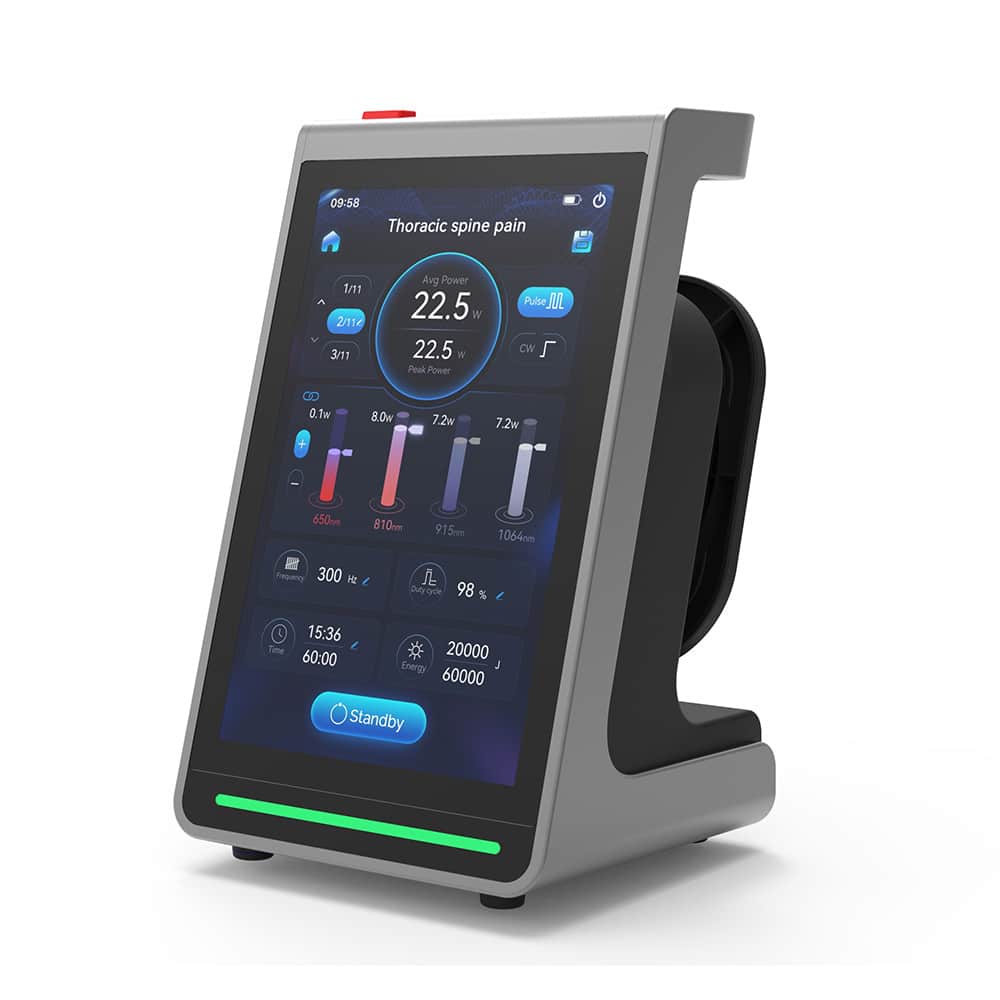
Explore Medray’s Class 4 Lasers
Medray’s Class 4 therapeutic lasers are designed to support circulation, tissue stimulation, and pain relief through a streamlined, repeatable workflow. Discover how laser therapy integrates seamlessly into busy clinics while providing a contact-free option for sensitive presentations.
Shockwave