
Why Focus on a Visit-Level Pathway for Lower-Limb Tendons?
- Maintain schedule integrity
- Reduce unnecessary variability
- Capture comparable data across providers
- Make informed progression decisions
How Should Clinicians Define the Aim of Today’s Visit?
- Enable the day’s planned loading
- Reduce provocation during a specific task
- Confirm tolerance from the previous loading step
What Measurement Should Be Used for Achilles or Patellar Tendons?
For Achilles Tendon Presentations:
Common options include:
- Number of heel raises performed in a fixed interval
- Repetitions until form change, using the same surface and cadence
For Patellar Tendon Presentations:
Recommended option:
- Single-leg decline squat repetitions performed at a consistent depth and tempo
Regardless of the test, the clinician must use:
- The same instructions
- The same equipment
- The same recording method
How Are Shockwave and Laser Used Inside the Visit?
-
Shockwave (Focal Application)
Shockwave is applied as a brief, targeted treatment directly over the most tender or pathological zone when symptoms are
- Localized
- Task-provoked
- Easily reproduced during loading
This aligns with scenarios where clinicians want to see whether focal mechanical stimulation influences task performance during the re-test.
-
Laser (Regional Application)
A short regional laser application is used when symptoms are:
- More diffuse
- Related to general irritability
- Present in patients needing comfort or preparation for loading
Laser therapy is FDA-cleared for increasing circulation, stimulating tissue, and pain relief, which may support readiness for the planned loading progression.
-
Why a Fixed Window?
Regardless of modality choice, the intervention uses the exact same time window each visit. This keeps documentation predictable and preserves schedule flow.
What Happens After the Modality Application
- Re-test the same measurement selected earlier
- Record the result
- Add a short descriptor of perceived change (e.g., “no change,” “improved,” “more comfortable”)
- Document start/stop times for the modality block
Why Does This Pathway Improve Clarity and Workflow?
- Interpretable data
- Reduced variability across providers
- Clearer return-to-load decision-making
- Concise, consistent documentation
- Better control of clinical schedules
Explore our Class 4 Lasers and Shockwave Therapy Device
Laser
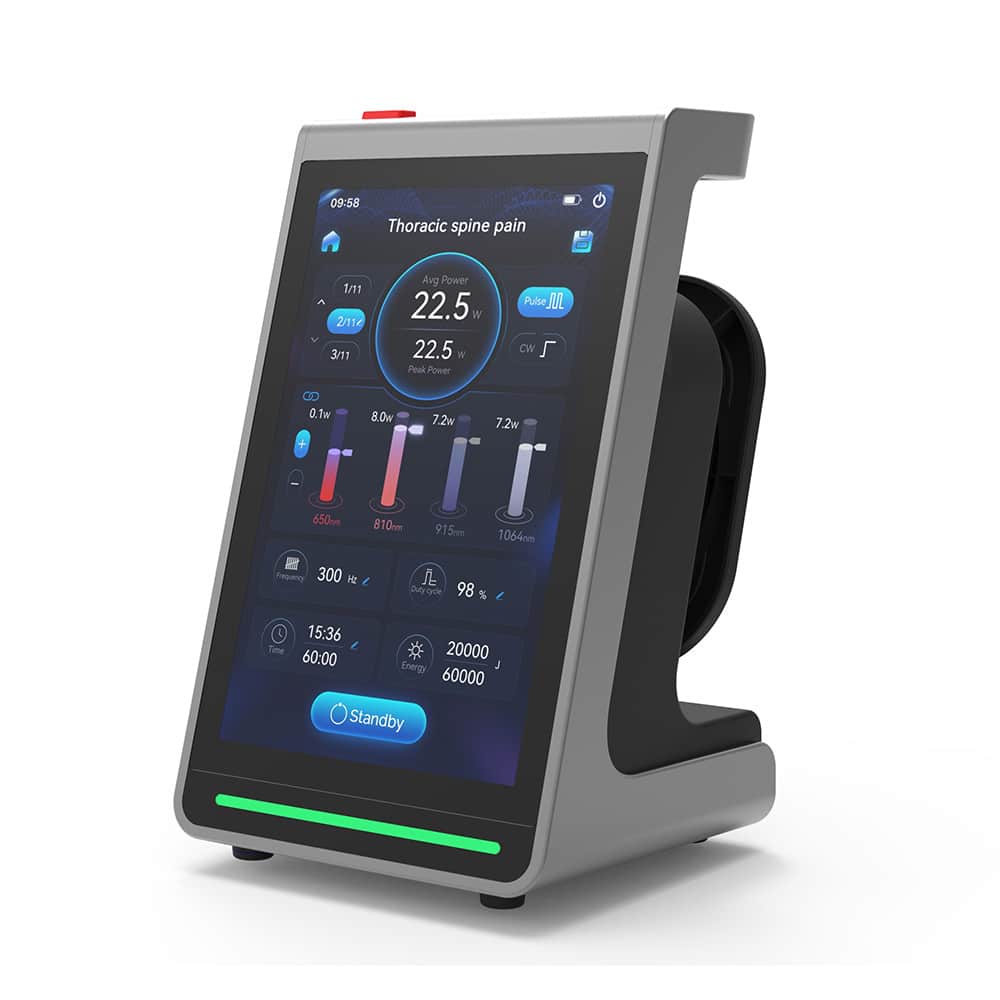
Explore Medray’s Class 4 Lasers
Medray’s Class 4 therapeutic lasers are designed to support circulation, tissue stimulation, and pain relief through a streamlined, repeatable workflow. Discover how laser therapy integrates seamlessly into busy clinics while providing a contact-free option for sensitive presentations.
Shockwave
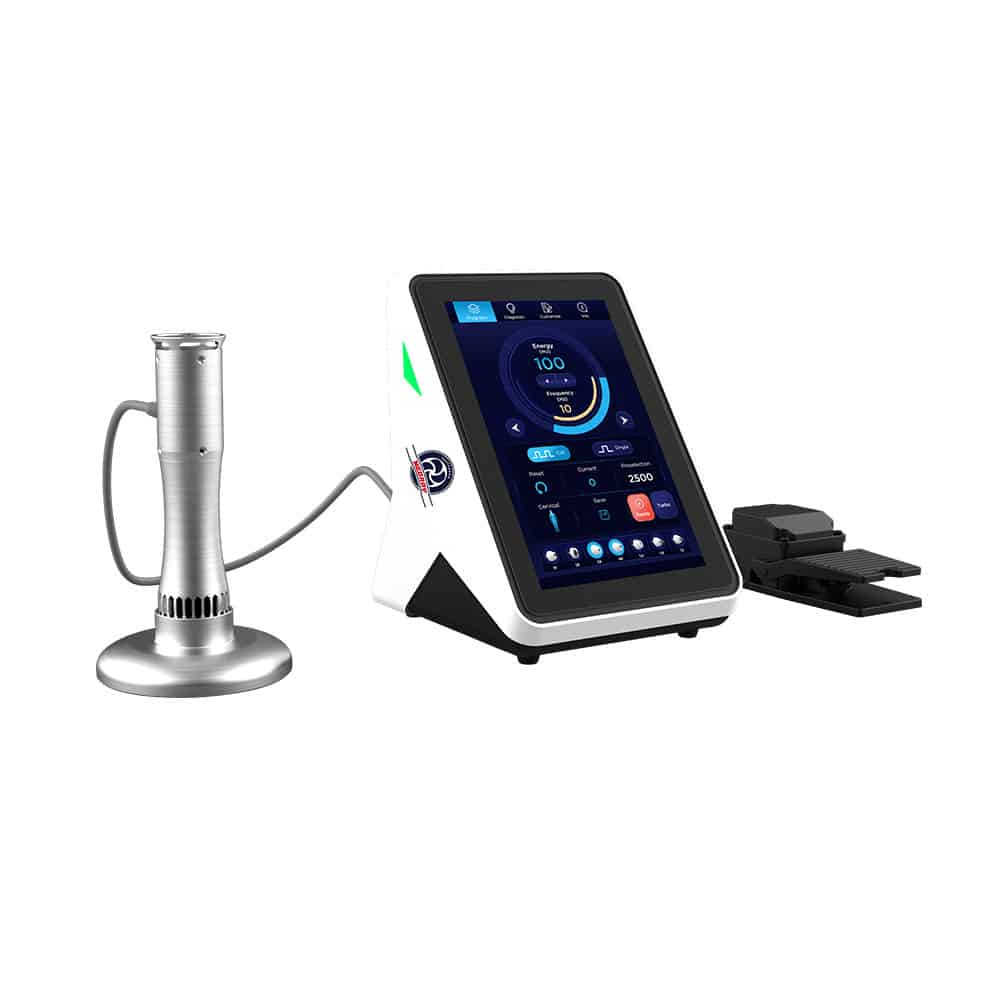
Explore Softshock 2.0 (RPW)
Support for structured tendon workflows
Take the Next Step Toward Organized Tendon Visits
Ready to bring more structure to Achilles and patellar tendon care? Our team helps clinics integrate graded loading plans with clearly timed laser and shockwave blocks, so every visit follows a consistent, defensible framework.
We can walk your staff through visit-level pathways, parameter sets, and simple re-test routines that fit inside a 20–30 minute follow-up. Call us at (573) 745-1086 or visit our Contact Us page to schedule a conversation about your clinic’s tendon workflow.
Medray Laser & Technology manufactures and distributes FDA-cleared medical devices designed to support circulation, tissue stimulation, and pain relief. Our products are intended for use by licensed healthcare professionals. While clinical research and practitioner experience support the use of laser and radial pressure wave (RPW) therapy in various applications, some uses described in this article may be considered off-label and are not explicitly cleared by the FDA. Patients should consult their healthcare provider to determine the best treatment for their individual needs. The information provided in this article is for educational purposes only and should not be considered medical advice or a substitute for consultation with a licensed medical professional.
Educational content is for licensed healthcare providers and may include discussion of clinical uses not cleared by the FDA. Provided for scientific exchange and not intended as promotional.
The FDA has cleared therapeutic lasers and shockwave devices for increasing circulation, tissue stimulation, and pain relief. Some of the use cases described in this article reflect how clinicians may apply shockwave therapy in practice, based on peer-reviewed research. This information is provided for educational purposes only and does not imply FDA clearance or approval for specific conditions.