
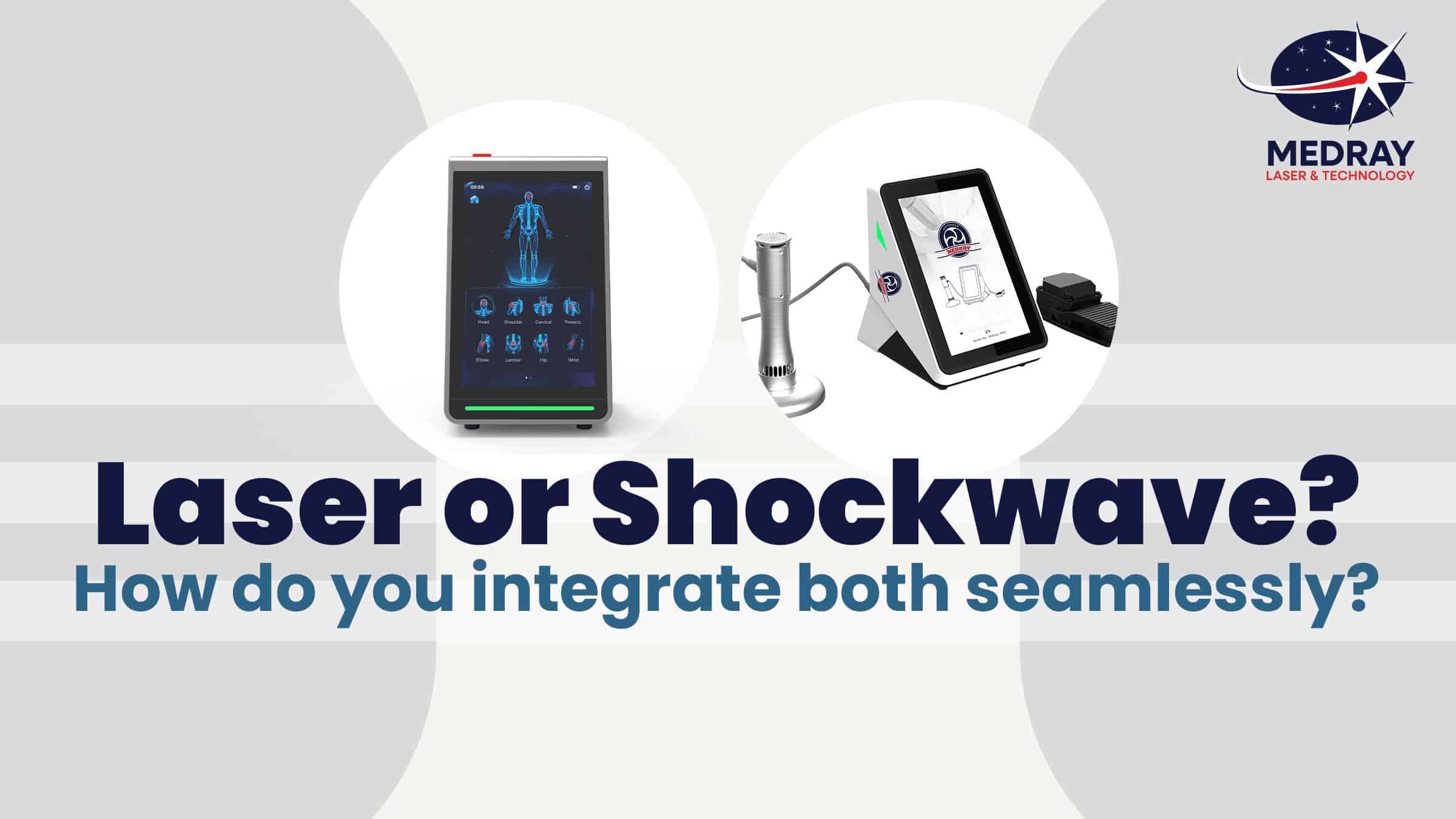
Modality choice should serve the plan, not drive it.
In a full clinic, modality choice should always serve the treatment plan—not dictate it. Clinicians need a simple, repeatable way to decide whether laser therapy or shockwave therapy should be the first step, and whether a short combination makes sense.
At Medray, we advocate for a deliberately straightforward decision framework that teams can apply without second-guessing. This ensures patient care remains consistent and workflows stay predictable, even on the busiest days.
Laser
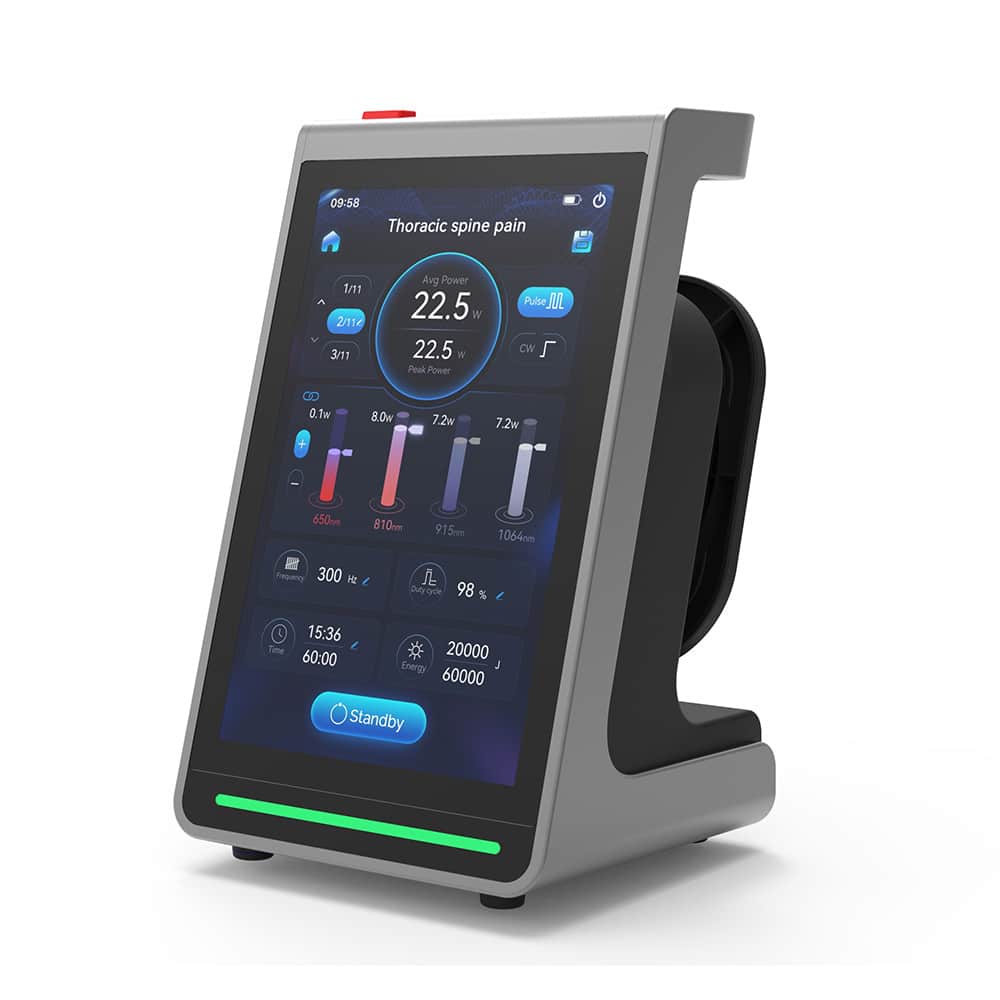
Explore Medray’s Class 4 Lasers
Medray’s Class 4 therapeutic lasers are designed to support circulation, tissue stimulation, and pain relief through a streamlined, repeatable workflow. Discover how laser therapy integrates seamlessly into busy clinics while providing a contact-free option for sensitive presentations.
Shockwave
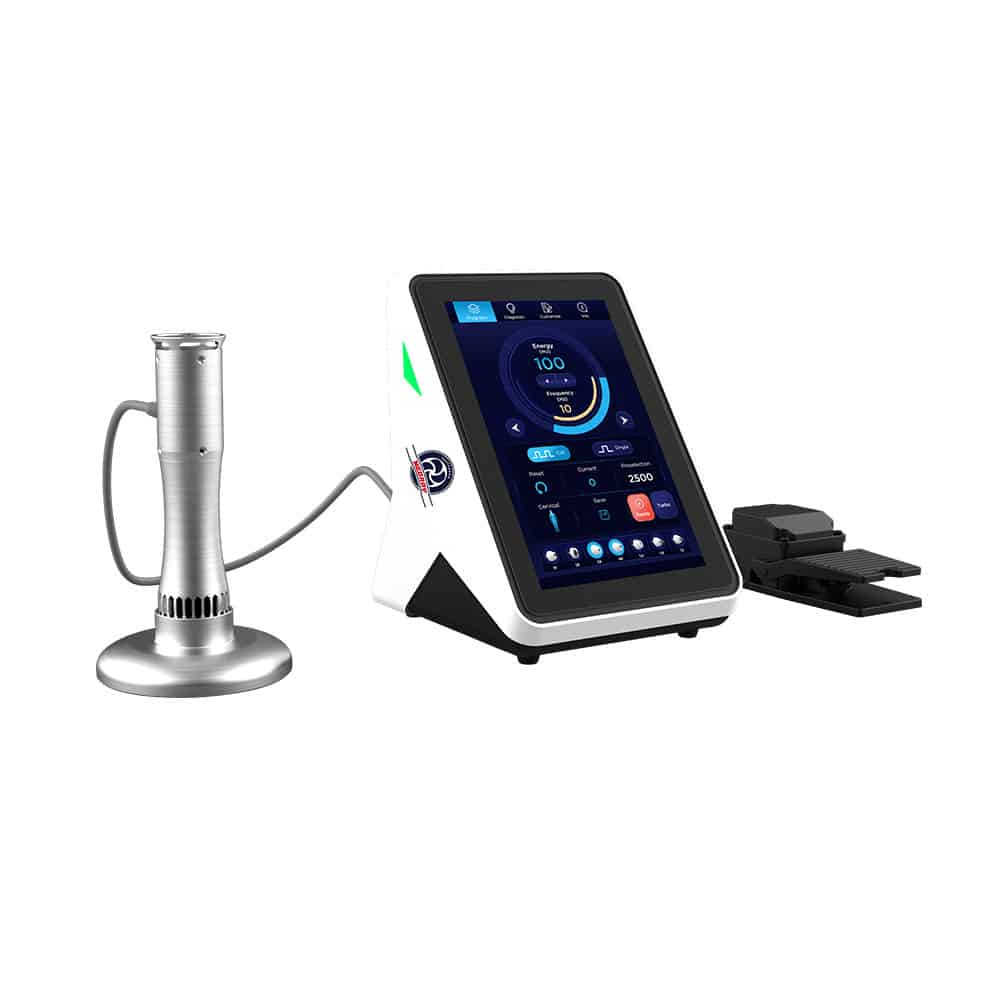
Explore Softshock 2.0 (RPW)
The Softshock 2.0 radial pressure wave device delivers a targeted mechanical stimulus that supports circulation, tissue stimulation, and pain relief. Learn how shockwave fits into daily clinical routines as a focal, efficient intervention for localized musculoskeletal presentations.
What’s the First Step in Deciding: Laser or Shockwave?
We recommend evaluating each case through two primary filters: irritability and focality.
- Focal presentations: When a patient identifies a very specific site of chronic irritation, such as a localized tender spot or thickening that flares with load (stress to the area from movement), a targeted mechanical stimulus often makes sense.
- In these cases, a short, focal shockwave application followed by an immediate re-test (e.g., grip strength, decline squat, first-step pain, whatever reflects their primary complaint) can deliver actionable feedback.
- Irritable or broad presentations: When the region is broadly sensitive, tolerance is low, or the case resembles post-acute soreness or an acute flare of a chronic condition that needs a gentler entry, laser therapy may be the better first choice.
- Laser is contact-free, quick to set up when standardized presets are used, and integrates seamlessly with graded loading in the same visit.
This simple distinction allows the team to make decisions quickly and confidently.
How Do You Adjust After the First Few Sessions?
After 2-3 visits, reassess the presentation:
- If irritability has decreased, you may switch the sequence (laser first, shockwave second).
- You may also simplify to a single modality if that best supports the day’s loading strategy.
The objective is not to prove whether laser or shockwave is “better,” but to advance the patient’s functional outcomes while keeping schedules predictable.
Good triage isn’t guesswork—it’s a mindful habit. Train it into the workflow, make the decision criteria visible at each station, and you’ll spend less time deciding and more time progressing.
With these steps, clinicians spend less time deciding and more time progressing patients through their care plans.
What About Mixed or Complex Cases?
Mixed presentations are common in clinical practice, and that’s where a brief sequence—focal first, then regional—can help.
- Apply a short dose of shockwave to the specific limiting area.
- Follow with a brief laser application to the surrounding tissues.
The operative word is short—these are compact interventions that fit neatly inside a standard follow-up visit, not standalone appointments
Why Is Functional Re-Testing So Critical?
The triage process only works if clinicians commit to a consistent functional re-test across sessions. “Today you cleared more degrees before the painful arc,” or “You hit ten heel-raises instead of six,” is a better story than “It felt a little better.” Sure, reduced pain is great, but that is more during the earlier stages of care where as we want to get to “what makes them move and perform better?” Record time-in and time-out for the modality block and note the rationale in one sentence.
This shift reframes progress from subjective pain relief toward functional improvement and performance, which is often more motivating for patients and more actionable for clinicians. Each session should include:
- One pre-selected functional re-test
- Documentation of time-in and time-out for the modality block
- A single-sentence rationale for modality choice
Solutions for confident clinical decision-making
Want a one-page triage sheet tailored to your patient mix?
Simplify your workflow with Medray’s decision framework for laser and shockwave therapy.
Our one-page triage guide helps your team apply consistent criteria, stay efficient on busy days, and keep functional re-testing front and center.
Call us at (573) 745-1086 or visit our
Contact Us
page to request more information or schedule a clinical walkthrough.