
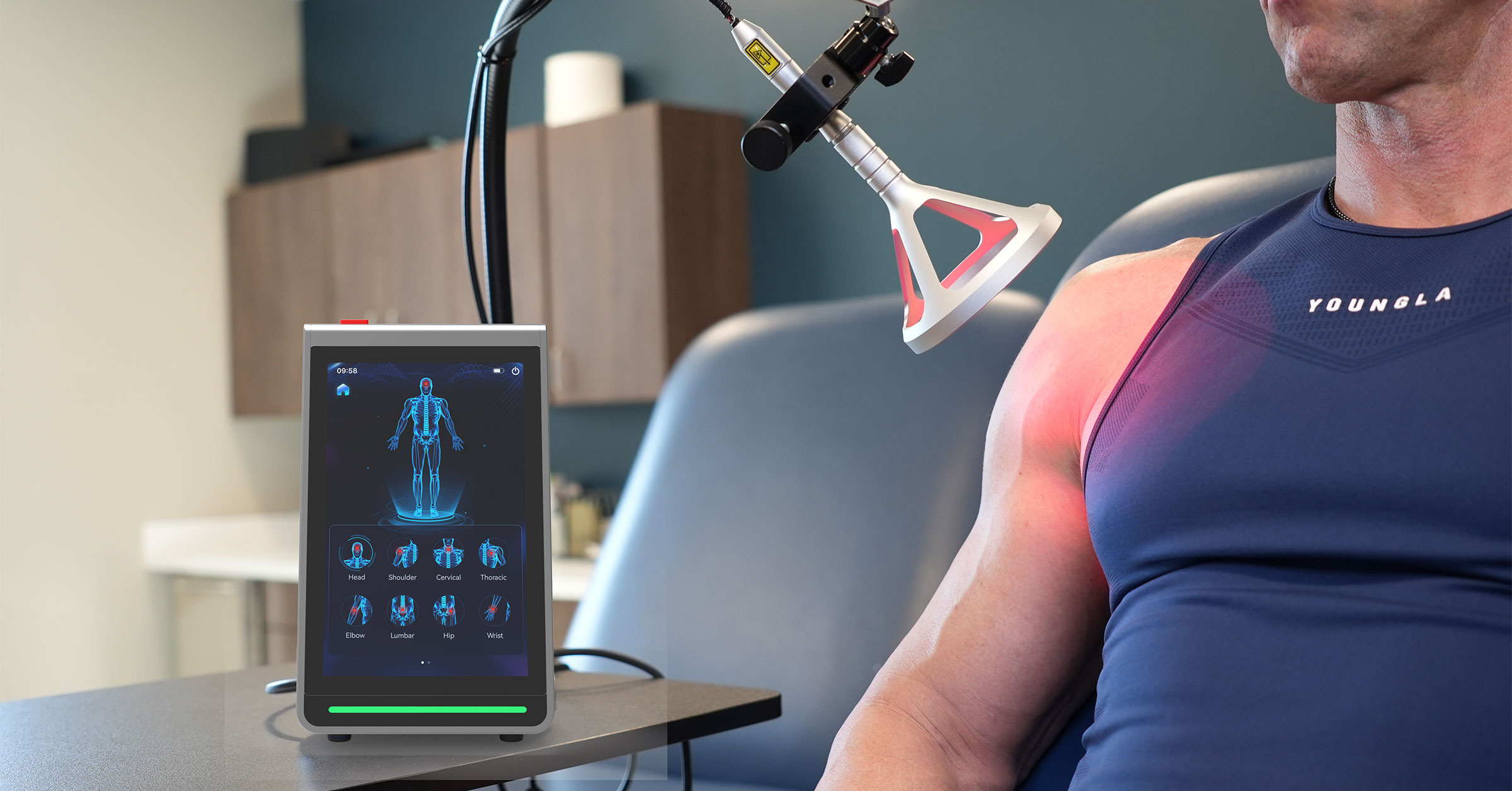
Advancements in rehab and sports medicine are reshaping how chiropractors, physical therapists, and athletic trainers manage injuries, enhance recovery, and optimize performance. New technologies like high-intensity laser therapy and acoustic shockwave therapy are improving patient outcomes — and also helping clinics to expand services and revenue.
Here’s a look into the latest trends that are driving the future of rehabilitation and sports recovery.
The rise of telemedicine in rehab and sports medicine
A major barrier to recovery during orthopedic physical therapy is patient follow-through. The CDC reports that nearly 70% of the more than 700,000 people who receive knee replacements each year never complete their post-surgery rehabilitation. Telerehabilitation is making it easier for patients to stay engaged with their orthopedic physical therapy plans by allowing them to complete sessions from home. Patients feel more comfortable and are more likely to adhere to their rehab program when they can do it in their own space. For clinics that adopt a forward-thinking telemedicine approach to patient recovery, telerehabilitation is improving accessibility and boosting patient success rates.VR-enhanced rehabilitation for motivation and engagement
Virtual reality (VR) is more than just a gaming trend — it’s becoming a core component of sports rehab physical therapy. The VR healthcare market is expected to grow by over 25% by 2028, as therapists integrate immersive environments into sports medicine and rehabilitation programs. Imagine an injured athlete using a VR headset to complete recovery exercises while immersed in a virtual training field or a gamified challenge that encourages movement. According to Healthcare Business Review, VR boosts patient compliance and motivation, which leads to faster, more effective recoveries.PEMF therapy for faster post-surgical recovery
Pulsed electromagnetic field (PEMF) therapy is another breakthrough in rehab and sports medicine, especially for post-surgical patients dealing with pain and swelling. PEMF is a non-invasive way to accelerate healing with low-frequency magnetic pulses that improve circulation and stimulate tissue repair. It’s gaining traction among clinics treating osteoarthritis, fractures, and muscle injuries.Hyperbaric oxygen therapy (HBOT) for athletic recovery
Athletes at the highest levels — including LeBron James — use hyperbaric oxygen therapy (HBOT) to extend their careers and enhance recovery. HBOT increases oxygen levels in the blood, which can speed up healing and reduce inflammation due to orthopedic injuries or athletic stresses. It’s becoming a sought-after option for clinics catering to high-performance athletes looking to maximize their recovery potential.Acoustic shockwave therapy is reshaping rehab protocols
Acoustic shockwave therapy is making waves in the rehab world. By delivering targeted shockwaves to injured tissues, this non-invasive therapy stimulates the body’s natural healing response and speeds up recovery. It’s particularly effective for treating tendonitis, muscle strains, and ligament injuries. “Our approach of combining postural correction and shockwave therapy has significantly expedited healing for athletes,” says Dr. Marco Ferrucci, DC. “This technology has revolutionized our treatment approach, allowing us to assist athletes across all levels, from high school to professional.” As more chiropractors and physical therapists integrate shockwave therapy into their rehab programs, patients are seeing faster recovery times and better long-term outcomes.High-intensity laser therapy for pain relief and injury prevention
Class IV high-intensity laser therapy (HILT) is changing the way injuries are managed. Unlike lower-level “cold” laser therapy, HILT penetrates deeper into tissues to promote cellular regeneration and reduce inflammation. Physical therapists, chiropractors, and athletic performance trainers are turning to high-intensity laser therapy for:- Pain management without medication: HILT stimulates endorphin production, reducing pain naturally.
- Swelling reduction: The therapy helps decrease inflammation, making it a powerful tool for post-injury recovery.
- Muscle conditioning and injury prevention: By improving blood flow and strengthening connective tissue, HILT helps prevent future injuries, making it ideal for sports rehab.