Understanding Shockwave Technology in Modern Clinical Practice
What Is the Difference Between Radial and Focused Shockwave Therapy?
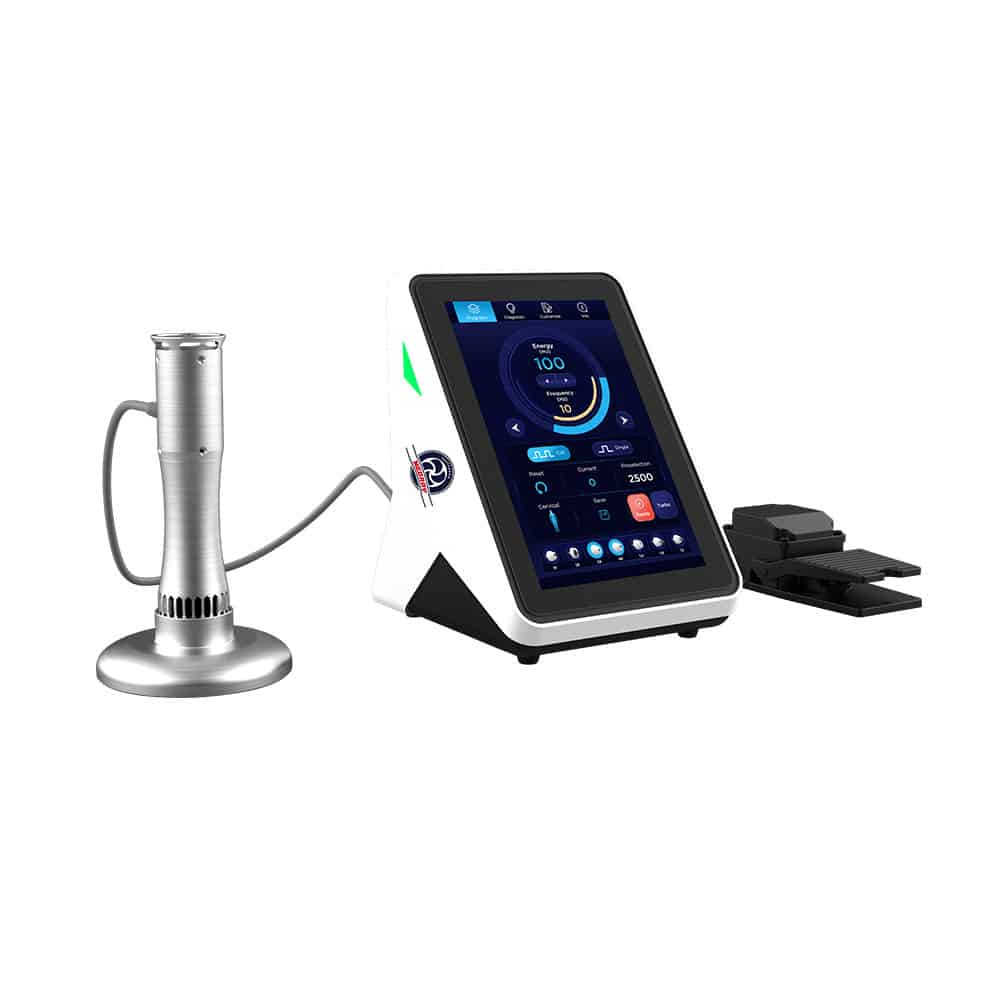
- Radial pressure shockwave (RPW): Produces a pressure wave that disperses outward from the applicator. The highest energy is delivered at the surface, gradually decreasing with depth.
- Focused Shockwave: Concentrates energy at a specific focal point within tissue, allowing for more targeted delivery at deeper levels.
Does “Deeper” Always Mean Better in Shockwave Therapy?
- Superficial or mid-depth
- Easily accessible
- Responsive to broader mechanical stimulation
Examples frequently discussed in clinical literature include:
- Plantar fascia
- Achilles tendon insertion
- Patellar tendon
- Lateral and medial elbow regions
- Calf musculature
- Periarticular soft tissues
When Might Radial Shockwave Be More Clinically Practical?
- Regional tissue stimulation
- Increased local circulation
- Modulation of mechanical sensitivity
- Broader coverage of soft-tissue structures
- Multiple regions within a session
- Mixed patient populations
- High-throughput environments
Ready to Choose the Right Shockwave Technology for Your Practice?
How Do These Technologies Fit into a Modern Clinical Workflow?
- Exercise and rehabilitation protocols
- Manual therapy
- Photobiomodulation (laser therapy)
- Decompression or traction
- Bracing or taping
- Movement retraining
Within this integrated model, the key question becomes: Which technology supports efficiency, consistency, and ease of use?
Radial shockwave systems often:
- Require less setup time
- Allow for faster application across treatment areas
- Are more easily adopted by clinical staff
- Fit naturally into multi-modal treatment plans
Focused systems, while highly specific, may be used more selectively depending on the practice’s clinical niche.
What Should Practice Owners Consider from a Business Perspective?
For business owners and decision-makers, the conversation extends beyond clinical theory into economics and utilization.
Key Considerations:
-
Capital Investment
Focused shockwave devices typically come with a significantly higher upfront cost. This may require:
- Higher per-session pricing
- Increased patient volume
- A more specialized service offering
-
Utilization Rate
A device that is used frequently across multiple indications often provides better ROI than one reserved for niche applications.
-
Patient Demographics
Does your current patient base primarily present with:
- Common soft-tissue complaints?
- Regional musculoskeletal discomfort?
- General functional limitations?
-
Workflow Efficiency
Time is a critical factor in outpatient care. Technologies that are:
- Quick to apply
- Easy to train on
- Comfortable for patients
-
Pain Reduction
Laser therapy helps reduce pain through several pathways:
- Decreasing nerve sensitivity
- Reducing inflammation-related pressure
- Encouraging the release of endorphins
Are Radial and Focused Shockwave Systems Interchangeable?
Focused Shockwave May Be Considered When:
- Deep, highly specific targeting is required
- The practice is built around advanced, specialized interventions
- There is a clear clinical rationale for focal energy delivery
Radial Shockwave May Be Considered When:
- Broad tissue coverage is beneficial
- The goal is regional stimulation rather than pinpoint targeting
- The practice treats a wide range of musculoskeletal complaints
- Efficiency and versatility are priorities
How Should Clinicians Evaluate Marketing Claims Around Shockwave Technology?
- “Deeper”
- “Stronger”
- “More advanced”
A more effective evaluation framework includes asking:
- What tissues am I targeting most often?
- Is the goal focal precision or regional stimulation?
- How will this integrate into my existing protocols?
- How often will I realistically use this device?
- Does this align with my patient population and pricing model?
What Role Does Patient Experience Play in Technology Selection?
- Sensory experience
- Treatment duration
- Perceived comfort
- Acceptance across patient populations
Why Are Many Practices Choosing Radial Shockwave?
- Clinical versatility
- Ease of integration
- Cost-effectiveness
- Broad applicability across common presentations
How Should You Decide Which Technology Is Right for Your Practice?
Ask yourself:
- What conditions do I see most frequently?
- What outcomes am I trying to support?
- How does this technology fit into my workflow?
- What level of investment aligns with my business model?
Explore our Class 4 Lasers and Shockwave Therapy Device
Laser
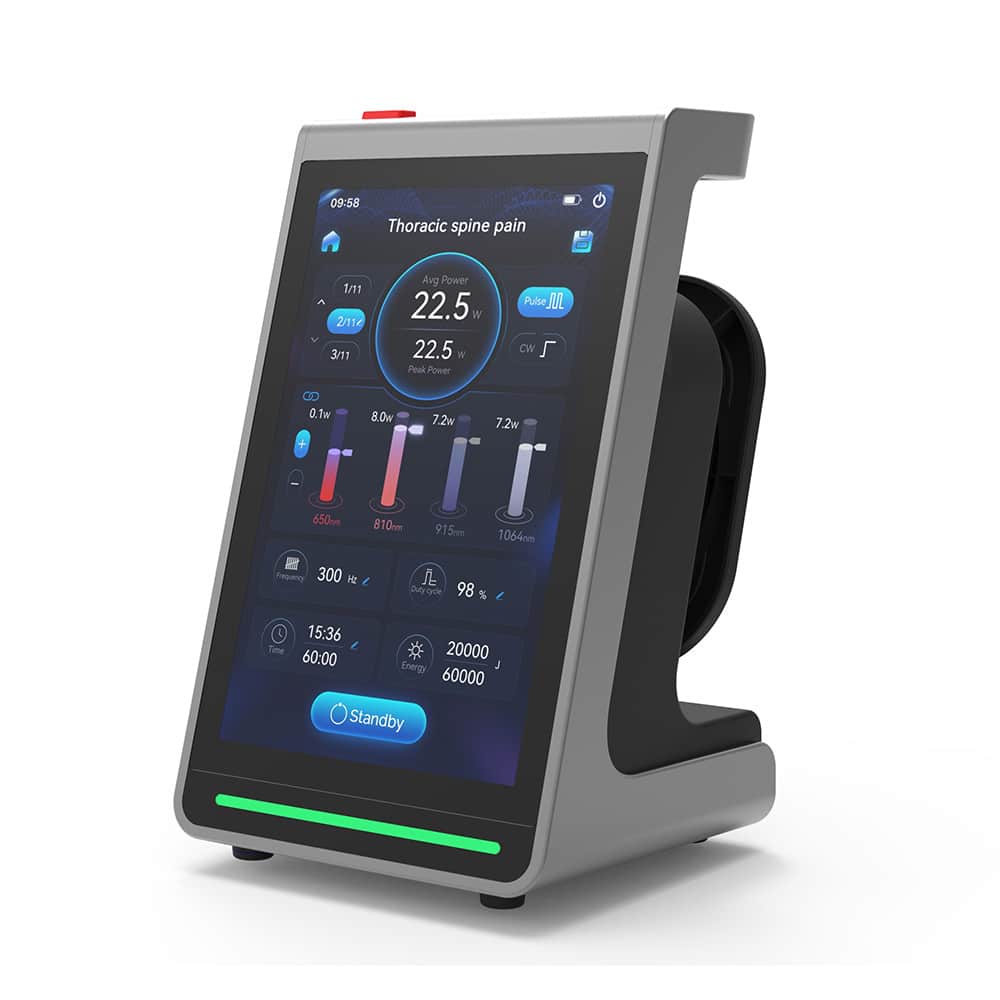
Explore Medray’s Class 4 Lasers
Medray’s Class 4 therapeutic lasers are designed to support circulation, tissue stimulation, and pain relief through a streamlined, repeatable workflow. Discover how laser therapy integrates seamlessly into busy clinics while providing a contact-free option for sensitive presentations.
Shockwave