
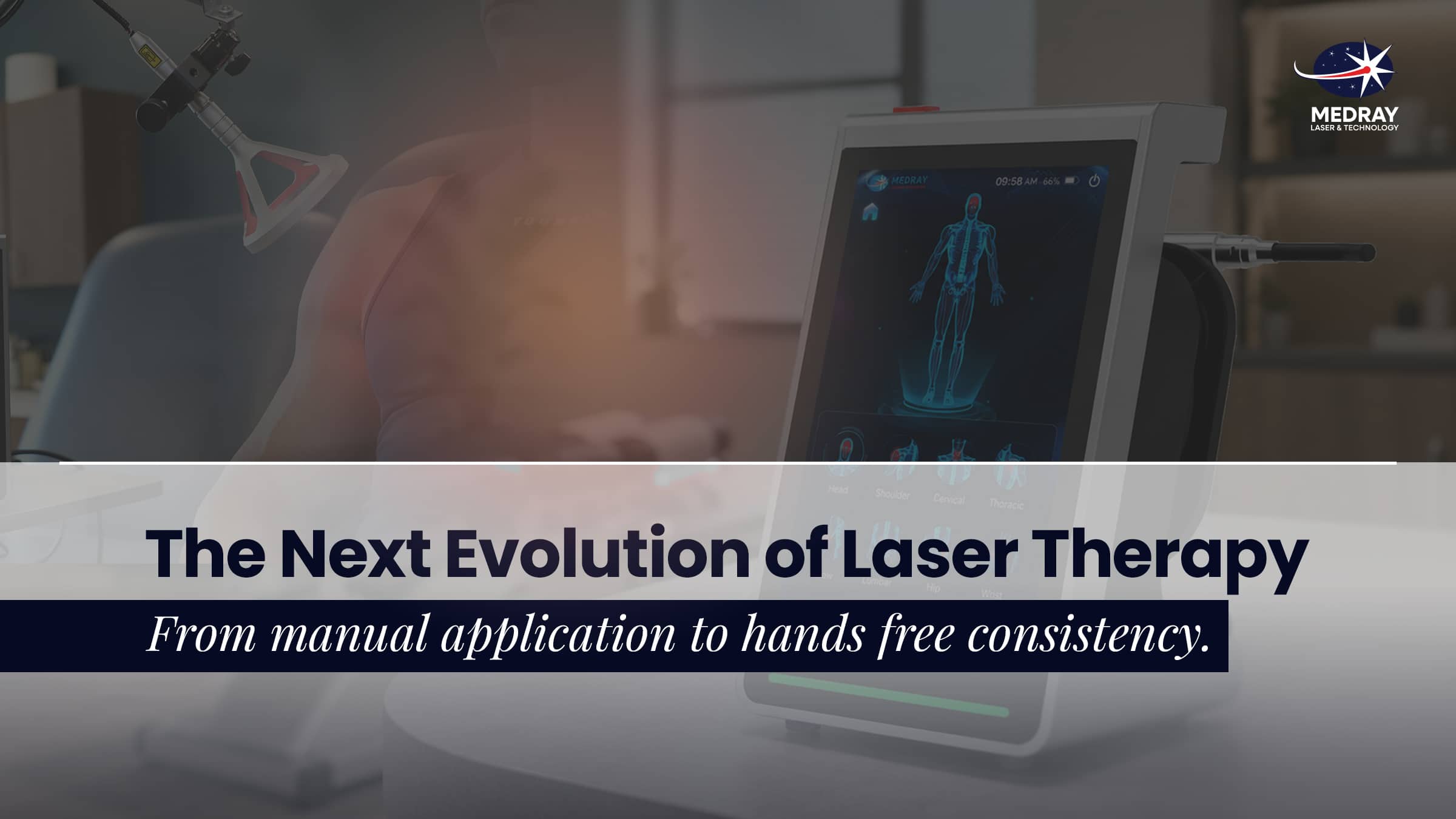
Why Laser Delivery Has Changed
Class IV laser therapy has evolved significantly over the past two decades.Interestingly, the most meaningful change has not been in the biological mechanisms behind photobiomodulation, but in how treatment is delivered.
The therapeutic goals of laser therapy remain largely unchanged. Clinicians continue to use laser technology to support increased circulation, tissue stimulation, temporary pain relief, and tissue recovery. What has changed is the ability to deliver those benefits more consistently across larger treatment regions and throughout an entire plan of care.
As healthcare practices continue to seek greater efficiency and standardization, hands free delivery systems are emerging as an important advancement in modern musculoskeletal care.
How Has Class IV Laser Therapy Evolved?
Earlier generations of Class IV laser systems required continuous clinician involvement during treatment.
The provider was responsible for:
- Holding the applicator
- Controlling movement speed
- Managing treatment coverage
- Maintaining appropriate contact or distance
- Ensuring consistent exposure across the treatment area
Experienced clinicians could achieve excellent results with this approach. However, manual application naturally introduced variability.
Factors such as:
- Treatment speed
- Coverage patterns
- Operator fatigue
- Time constraints
- Differences between providers
could all influence how much energy was ultimately delivered to tissue.
In other words, the prescribed treatment parameters and the actual treatment delivered were not always identical.
This challenge becomes even more important when treating larger anatomical regions.
Why Does Consistency Matter in Laser Therapy?
As laser power increases, clinicians gain the ability to deliver therapeutic energy more efficiently across broader treatment surfaces.
Higher power systems allow practitioners to deliver a prescribed dose in less time while maintaining appropriate treatment parameters. However, achieving consistent coverage over large anatomical regions remains essential.
This is where hands free delivery systems provide a meaningful advantage.
Rather than relying entirely on manual beam movement, hands free systems can deliver treatment across a defined area with greater consistency and reproducibility.
For clinicians, this means treatment delivery can become more standardized from one visit to the next.
Does Hands Free Delivery Change How Laser Therapy Works?
No.
The biological mechanisms associated with photobiomodulation remain the same regardless of how the light is delivered.
Research continues to explore laser therapy’s interaction with cellular and metabolic processes, including:
- Mitochondrial activity
- Cellular energy production
- Microcirculation
- Tissue response
- Pain modulation pathways
Why Is Regional Treatment Becoming More Important?
Many musculoskeletal complaints are not isolated to a single anatomical point.
Clinicians frequently encounter conditions involving broader functional regions rather than one discrete structure.
Examples include:
- Shoulder dysfunction
- Knee pain
- Low back conditions
- Plantar heel pain
These presentations often involve multiple tissues contributing to the patient’s symptoms and movement limitations.
As a result, clinicians are often treating an entire region rather than a single symptomatic location.
Hands free laser systems may help support this regional treatment approach by providing consistent coverage across larger anatomical areas while allowing clinicians to focus on other aspects of care.
How Can Hands Free Laser Therapy Support Shoulder Care?
Shoulder complaints often involve a combination of structures and movement patterns.
A patient may present with:
- Rotator cuff related symptoms
- Bursal irritation
- Long head biceps involvement
- Periscapular dysfunction
- Cervical or thoracic contributions
While manual laser application can certainly be effective, achieving consistent coverage across the entire shoulder complex requires time and attention.
Hands free delivery may allow more uniform treatment across the anterior, lateral, and posterior shoulder regions while the clinician simultaneously provides:
- Movement assessment
- Corrective exercise instruction
- Manual therapy
- Scapular stabilization strategies
What About Knee Pain?
Knee complaints frequently involve multiple tissues and contributing factors.
Clinicians commonly encounter combinations of:
- Periarticular soft tissue irritation
- Tendon overload
- Patellofemoral sensitivity
- Movement compensation patterns
- Changes in gait mechanics
- Exercise progression
- Functional movement training
- Loading strategies
- Patient education
Why Is Hands Free Laser Particularly Useful for Low Back Care?
Low back presentations are rarely limited to a single treatment point.
Many patients present with involvement of:
- Paraspinal musculature
- Thoracolumbar fascia
- Posterior pelvic structures
- Regional movement dysfunction
For these broader presentations, regional treatment consistency becomes especially important.
Hands free laser delivery may allow clinicians to provide treatment across larger areas while simultaneously integrating other interventions such as:
- Spinal decompression
- Mobilization
- Exercise progression
- Functional movement instruction
This can improve both treatment organization and workflow efficiency.
How Does This Apply to Plantar Heel Pain?
Plantar heel pain is another example where treatment often extends beyond a single painful location.
Although clinicians may choose to focus on the plantar fascia insertion or surrounding tissues, contributing factors frequently include:
- Calf complex tightness
- Posterior chain restrictions
- Foot intrinsic weakness
- Altered stance mechanics
Hands free laser delivery can support broader regional treatment approaches when appropriate while allowing the provider to address movement, loading, and home care strategies.
Importantly, this does not eliminate the value of focused manual treatment. It simply provides another option for delivering consistent care.
Does Hands Free Laser Therapy Improve Workflow?
One of the most practical benefits of hands free delivery is its ability to function as a clinician extender.
Rather than requiring continuous beam management, treatment can proceed while the clinician performs other important aspects of care.
This may include:
- Reassessment
- Manual therapy
- Exercise instruction
- Documentation
- Patient education
The goal is not to make care passive.
The goal is to allow treatment to be delivered consistently while preserving clinician time for interventions that require direct expertise and interaction.
For many practices, this creates meaningful operational advantages without compromising clinical quality.
Is Manual Laser Therapy Becoming Obsolete?
Not at all.
Manual application continues to play an important role in many situations.
Clinicians may prefer manual delivery when:
- The treatment area is small
- Tissue response requires ongoing adjustment
- Greater precision is needed
- Real time clinical decision making is beneficial
Hands free delivery should be viewed as an expansion of treatment options rather than a replacement for manual techniques.
The most important question is not which approach is newer. The more important question is which approach best matches the patient’s anatomy, treatment goals, and overall plan of care.
The Future of Class IV Laser Therapy
The evolution of Class IV laser therapy is not simply a story of newer devices replacing older ones.
It represents a broader shift toward delivering therapeutic dose with greater consistency, improved workflow integration, and more reproducible treatment experiences.
As musculoskeletal care continues to evolve, clinicians are increasingly focused on combining technology, clinical reasoning, and operational efficiency.
Hands free laser systems support that objective by allowing providers to deliver consistent regional treatment while maintaining focus on examination, rehabilitation, movement correction, and patient education.
In that sense, the future of laser therapy is not about automation replacing clinical expertise.
It is about technology supporting clinicians in delivering care more consistently and efficiently than ever before.
Explore our Class 4 Lasers and Shockwave Therapy Device
Laser
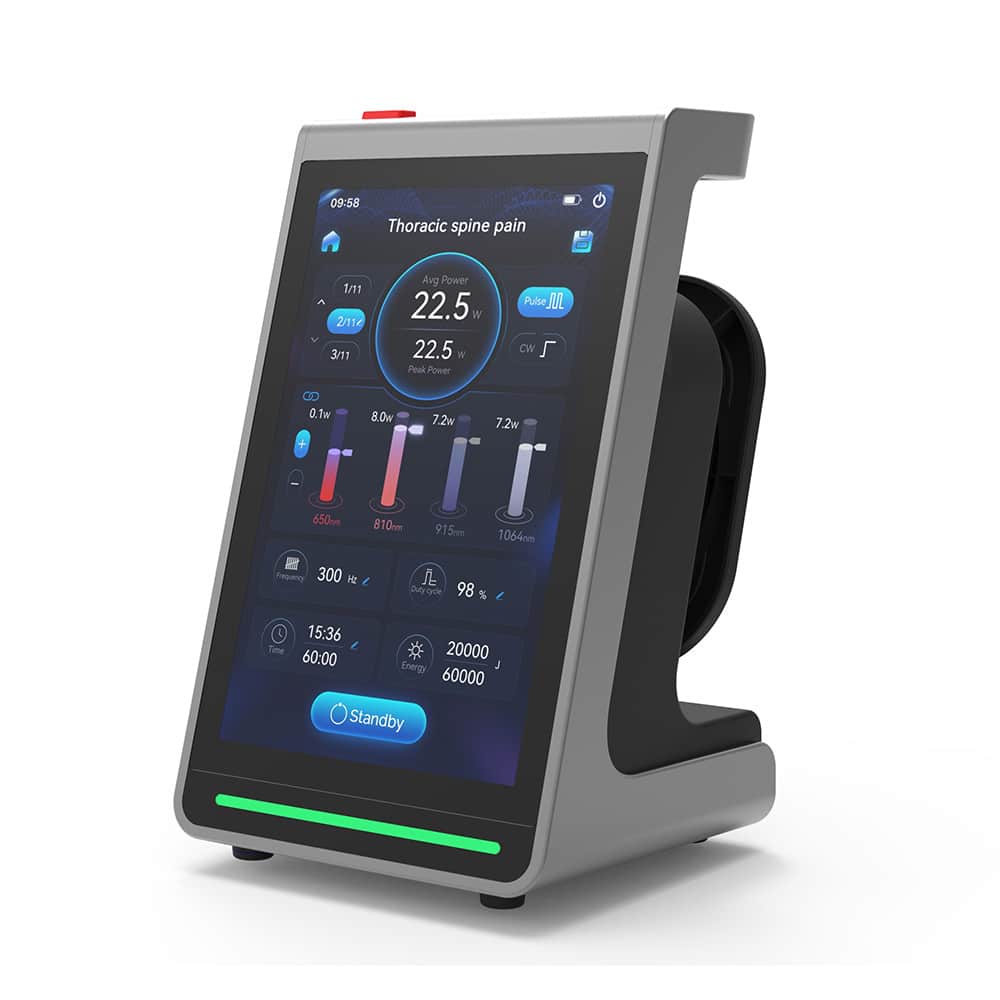
Explore Medray’s Class 4 Lasers
Medray’s Class 4 therapeutic lasers are designed to support circulation, tissue stimulation, and pain relief through a streamlined, repeatable workflow. Discover how laser therapy integrates seamlessly into busy clinics while providing a contact-free option for sensitive presentations.
Shockwave
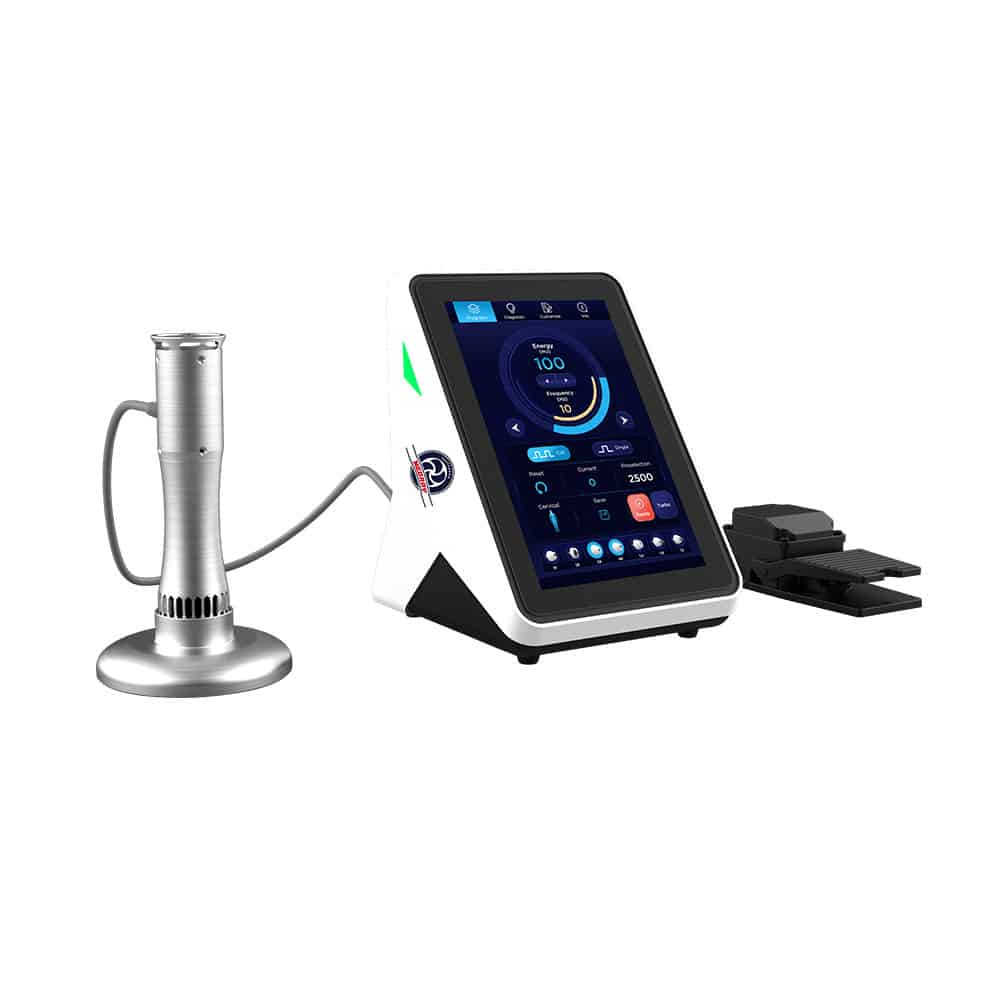
Explore Softshock 2.0 (RPW)
Clinical guidance for hands free laser delivery
Deliver Class IV Laser Therapy With Greater Consistency
Class IV laser therapy continues to evolve through advances in treatment delivery. Hands free systems may help support greater consistency, reproducible regional coverage, and improved workflow integration while preserving the clinical expertise that guides every plan of care. Medray helps clinicians understand how hands free laser delivery can complement examination, rehabilitation, patient education, and movement-based interventions without changing the biological mechanisms of photobiomodulation. Call us at (573) 745-1086 or visit our Contact Us page to discuss evidence-aligned Class IV laser therapy strategies for your practice.