
Integrating Dual Therapy into Chiropractic Practice: A Modern Approach to Conservative Care
Modern chiropractic practice rarely revolves around a single isolated complaint. Patients commonly present with overlapping issues that influence one another biomechanically and functionally.
A patient with low back discomfort may also report knee pain related to altered loading patterns. Someone with plantar heel pain may demonstrate compensation through the calf, hip, or lumbar region. Cervical complaints frequently coexist with shoulder dysfunction or upper quarter tension.
In these cases, the challenge is not simply identifying the primary pain generator. The challenge is organizing care in a way that addresses multiple clinically relevant regions efficiently and logically within the same visit.
This is where dual therapy models deserve consideration.
What Is Dual Therapy in Chiropractic Practice?
Dual therapy should not be understood as randomly combining technologies during the same appointment.
Instead, it refers to the coordinated use of two treatment inputs, each serving a distinct clinical role within a structured care plan.
When high intensity laser therapy and shockwave therapy are integrated appropriately, the goal is not simply to add more treatment. The objective is to:
- Improve workflow efficiency
- Support treatment organization
- Address multiple clinically relevant regions within one visit
- Enhance patient tolerance to broader rehabilitation strategies
Why Are More Chiropractic Clinics Considering Dual Therapy Models?
- Manipulation and mobilization
- Corrective exercise
- Soft tissue techniques
- Movement retraining
- Decompression and rehabilitation strategies
- Patient education
How Do Laser Therapy and Shockwave Therapy Differ?
Laser
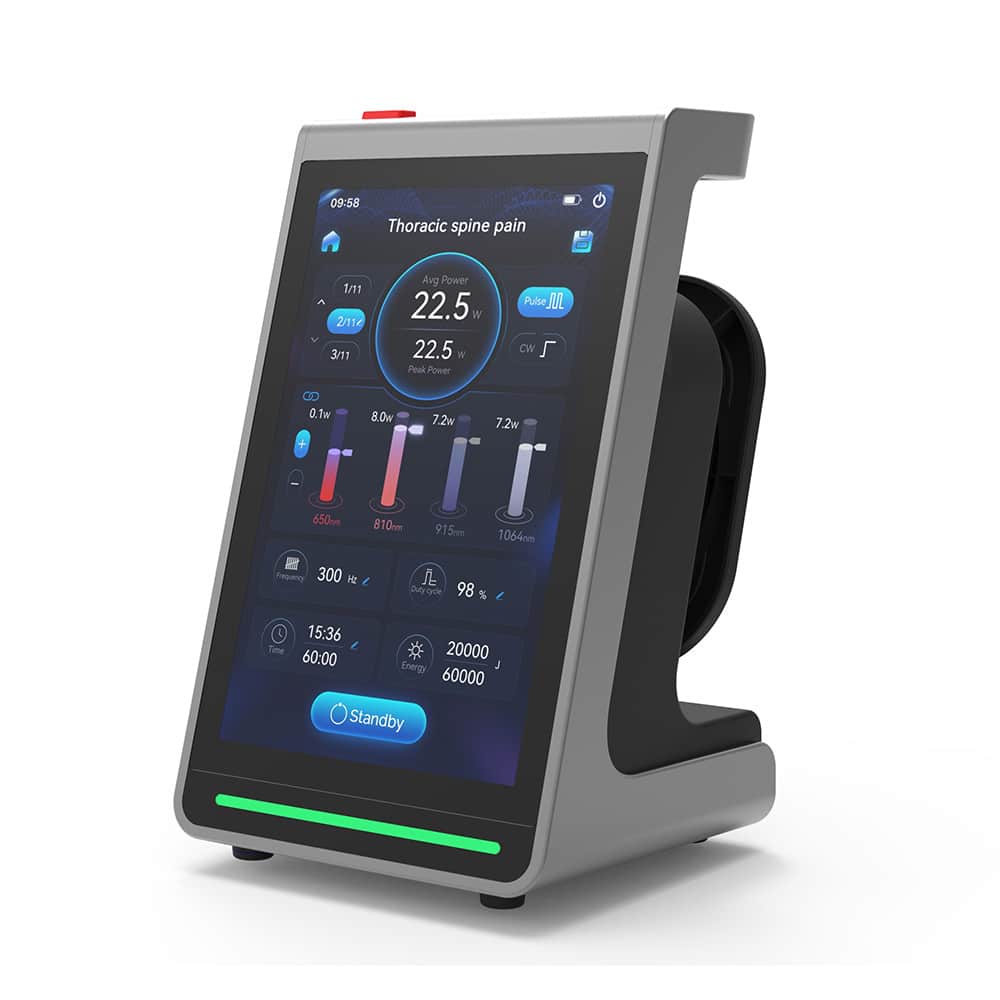
High Intensity Laser Therapy
Laser therapy is often positioned as a broader regional treatment input. Clinicians may use it to support:
- Increased circulation
- Tissue stimulation
- Temporary pain relief
- Reduced tissue irritability
- Improved tolerance to movement or rehabilitation
In chiropractic workflows, laser therapy is commonly integrated before:
- Manipulation
- Mobilization
- Exercise progression
- Decompression therapy
This may help prepare tissues for the next phase of care.
Shockwave
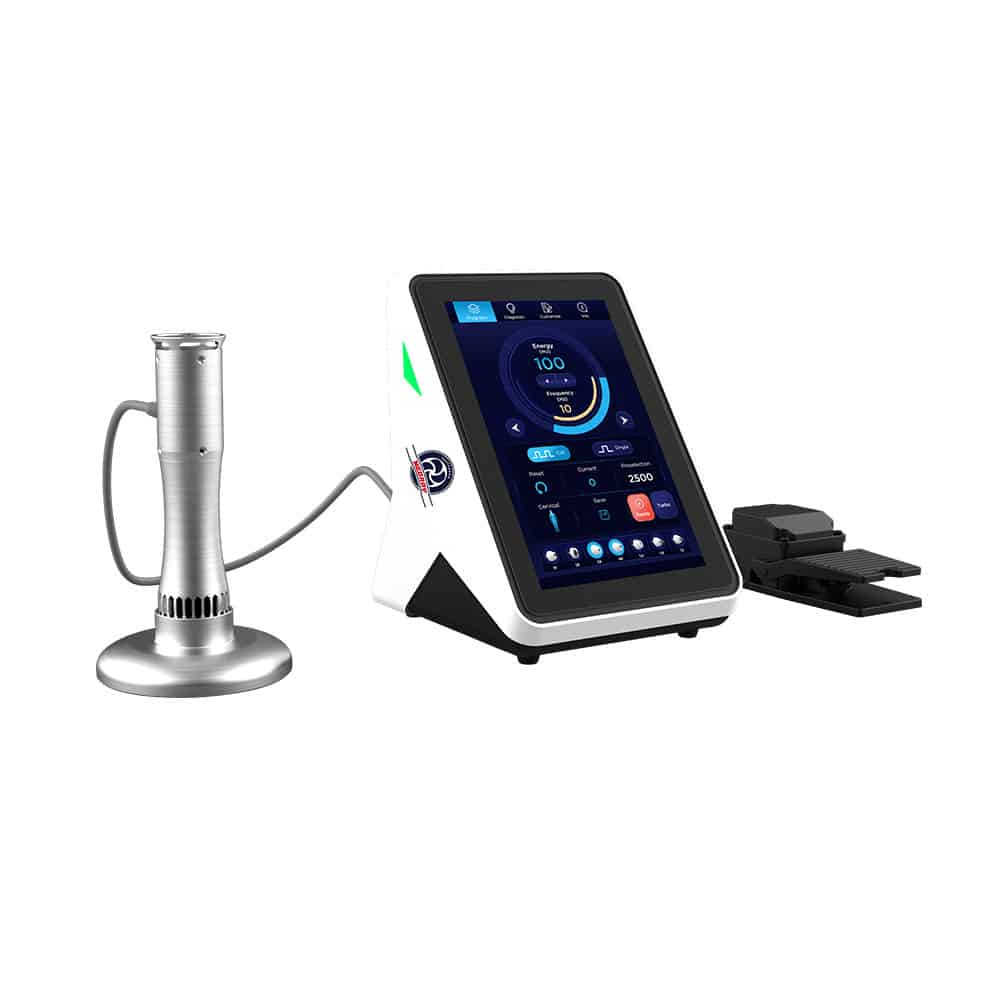
Shockwave Therapy
Shockwave therapy provides a more focused mechanical stimulus and is frequently considered in presentations involving:
- Chronic soft tissue irritation
- Tendon related complaints
- Persistent mechanical overload
- Localized tissue sensitivity
Its application is typically more targeted and often shorter in duration.
Together, these technologies can support different aspects of the same patient presentation.
Why Does This Combination Make Sense Clinically?
Many patients require both regional and localized treatment considerations within the same plan of care.
For example:
Low Back Pain with Plantar Heel Pain
A patient with chronic low back discomfort may also present with persistent plantar heel sensitivity. In this scenario:
- Laser therapy may be used regionally to support lumbar comfort and movement tolerance
- Shockwave may be applied more focally to the plantar fascia region if clinically appropriate
The visit remains structured and intentional because each intervention serves a different purpose.
Cervical and Shoulder Complaints
- Regional laser application may support the cervical or periscapular region
- Shockwave may be considered for a more localized tendon related presentation around the shoulder complex
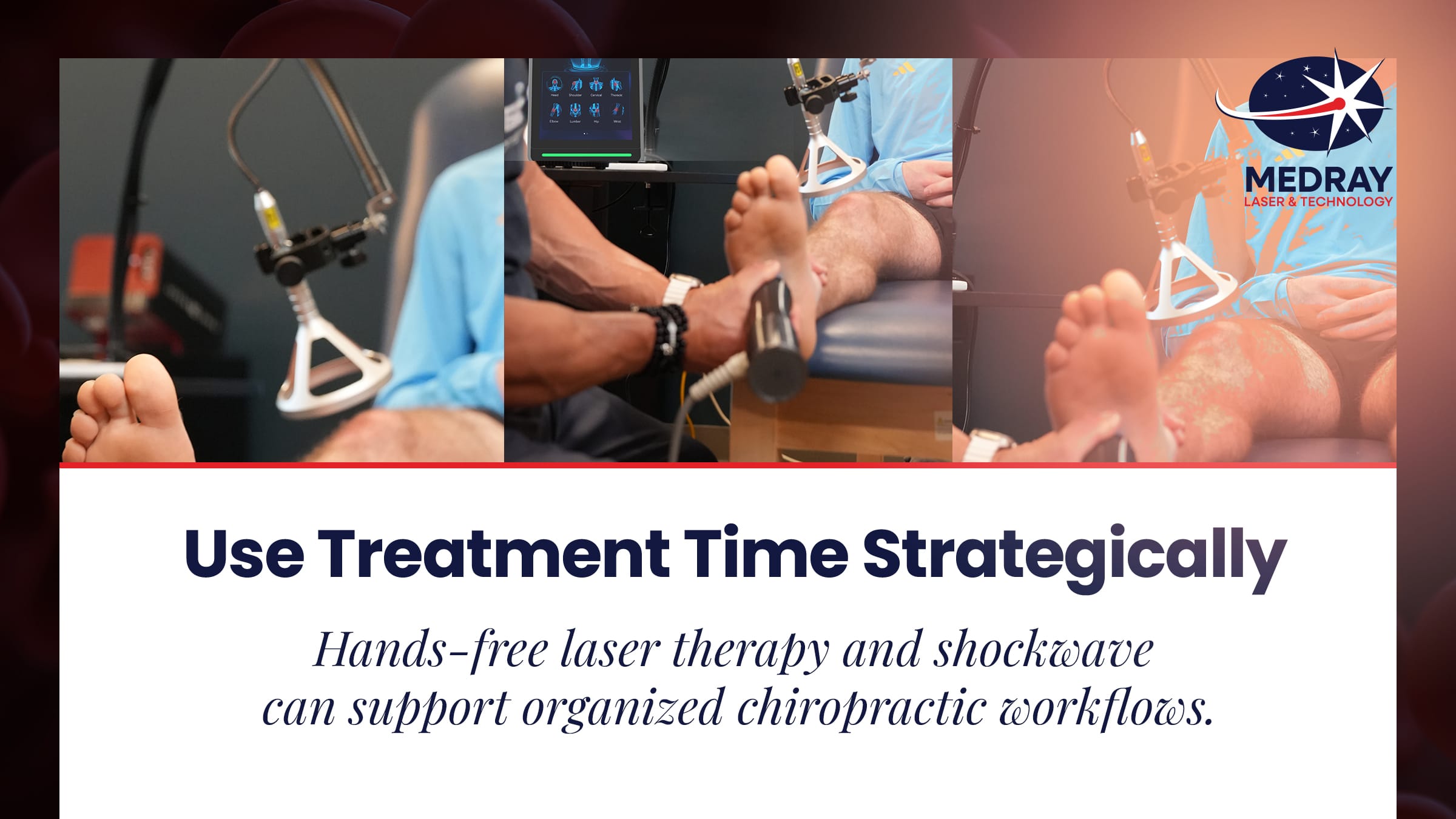
How Does Hands Free Laser Therapy Improve Workflow?
- Reassessment
- Soft tissue treatment
- Manipulation
- Exercise instruction
- Documentation
This changes how treatment time is used.
Instead of requiring continuous device management, the clinician can remain engaged in the hands on and movement based interventions that remain central to chiropractic care.
In busy outpatient practices, preserving clinician time without reducing treatment quality can make a meaningful difference.
Can Shockwave Therapy Also Improve Efficiency?
Yes, particularly because of its focused application style.
Shockwave is often delivered over a shorter treatment window and directed toward a more specific tissue region. This makes it easier to integrate into the same appointment without making visits feel prolonged or disjointed.
In the appropriate patient, a broader unattended laser application combined with targeted shockwave treatment may allow clinicians to address multiple complaints within one coordinated session.
This can improve visit organization while maintaining treatment specificity.
Does Dual Therapy Mean “More Treatment Is Better”?
No.
The effectiveness of dual therapy depends entirely on clinical reasoning and care organization.
The regions being treated should be clinically relevant, and each intervention should have a clearly defined purpose within the broader treatment plan.
Care should still include:
- Reassessment
- Functional progression
- Patient education
- Movement based carryover strategies
Without these elements, adding more technology does not improve care quality. It simply increases treatment volume.
The stronger model is not that two modalities are automatically better than one. The stronger model is that some patients present with multiple clinically meaningful regions that may benefit from different treatment inputs within the same visit.
How Can Dual Therapy Improve the Patient Experience?
- A patient with low back and knee complaints often experiences both issues together functionally
- A patient with plantar heel pain frequently recognizes that altered walking mechanics are affecting other areas
When care acknowledges these interconnected patterns, patients may better understand the overall treatment strategy.
A more organized visit structure may also help:
- Reduce scheduling friction
- Improve adherence to care plans
- Increase patient engagement
- Create a more comprehensive care experience
What Is the Bigger Takeaway for Chiropractic Practices?
The larger conversation is not about replacing chiropractic fundamentals with technology.
Manipulation, mobilization, rehabilitation, movement correction, decompression, and patient education remain central to musculoskeletal care.
Dual therapy simply supports a more modern delivery model where multiple clinically relevant complaints can be addressed efficiently within a single session.
For many chiropractic clinicians, this is the most practical way to view integration:
- Hands free laser therapy supports broader regional treatment while preserving clinician time
- Shockwave therapy supports focal mechanical stimulation where appropriate
- Together, they create greater flexibility in managing complex patient presentations
Clinical guidance for dual therapy integration
Integrate Dual Therapy Into Modern Chiropractic Workflows
Medray Laser & Technology manufactures and distributes FDA-cleared medical devices designed to support circulation, tissue stimulation, and pain relief. Our products are intended for use by licensed healthcare professionals. While clinical research and practitioner experience support the use of laser and radial pressure wave (RPW) therapy in various applications, some uses described in this article may be considered off-label and are not explicitly cleared by the FDA. Patients should consult their healthcare provider to determine the best treatment for their individual needs. The information provided in this article is for educational purposes only and should not be considered medical advice or a substitute for consultation with a licensed medical professional.
Educational content is for licensed healthcare providers and may include discussion of clinical uses not cleared by the FDA. Provided for scientific exchange and not intended as promotional.
The FDA has cleared therapeutic lasers and shockwave devices for increasing circulation, tissue stimulation, and pain relief. Some of the use cases described in this article reflect how clinicians may apply shockwave therapy in practice, based on peer-reviewed research. This information is provided for educational purposes only and does not imply FDA clearance or approval for specific conditions.