
What Is Shockwave Therapy?
The Basics: What Is Shockwave Therapy?
Shockwave therapy uses high-energy acoustic waves that are delivered into injured tissue through the skin. These waves are mechanical, not electrical, and they interact with the body at a cellular level to stimulate healing.
There are two primary types:
- Focused shockwave therapy – delivers energy to a precise depth
- Radial shockwave therapy (RPW) – disperses energy across a broader treatment area
Both are used clinically depending on the condition, tissue depth, and treatment goals.
How Does Shockwave Therapy Work?
Shockwave therapy does not mask pain—it helps address the underlying cause by activating the body’s natural healing response.
When acoustic waves enter the tissue, they create controlled micro-stimulation that leads to several biological effects:
-
Increased Blood Flow
The mechanical energy promotes new blood vessel formation (angiogenesis), which improves oxygen and nutrient delivery to damaged tissue.
-
Cellular Regeneration
Shockwave stimulation activates fibroblasts and osteoblasts, the cells responsible for repairing connective tissue and bone.
-
Breakdown of Scar Tissue and Calcifications
The energy helps disrupt dense, poorly healed tissue and calcium deposits that contribute to pain and stiffness.
-
Reduction of Chronic Inflammation
It helps “reset” stalled healing processes that often occur in long-standing injuries.
-
Pain Signal Modulation
Shockwave therapy can reduce pain sensitivity by influencing nerve signaling and lowering pain-producing chemical activity.
Common Conditions Treated with Shockwave Therapy
Shockwave therapy is widely used for chronic musculoskeletal conditions, particularly those that have not responded well to rest, medication, or standard physical therapy.
Common clinical areas where shockwave therapy is used:
- Foot & Ankle
- Plantar fasciitis
- Achilles tendinopathy
- Heel pain
- Knee
- Patellar tendinitis (jumper’s knee)
- IT band syndrome
- Hip
- Greater trochanteric pain syndrome
- Shoulder
- Rotator cuff tendinopathy
- Calcific tendonitis
- Elbow
- Tennis elbow
- Golfer’s elbow
- Other Uses
- Myofascial trigger points
- Chronic muscle tightness
- Ligament injuries
- Delayed bone healing
What Happens During a Treatment?
-
Gel is applied to the treatment area.
-
A handheld device delivers acoustic pulses into the tissue.
-
Treatments typically last 5–10 minutes.
-
Most protocols involve a series of sessions over several weeks.
Patients often describe the sensation as tapping or pulsing. Intensity can be adjusted for comfort and clinical effectiveness.
What Makes Shockwave Therapy Different?
Unlike injections or surgery, shockwave therapy:
- Is non-invasive
- Requires no anesthesia
- Has minimal downtime
- Targets the root cause of pain
- Encourages true tissue repair
Shockwave Therapy in Human and Veterinary Medicine
- Tendon injuries in horses
- Arthritis in dogs
- Ligament and joint pain in active animals
The Future of Regenerative Care
- Physical rehabilitation
- Laser therapy
- Strength and mobility programs
Final Thoughts
Shockwave therapy represents a major advancement in treating chronic musculoskeletal pain. Rather than covering up symptoms, it stimulates the body’s own repair systems to restore damaged tissue, improve circulation, and reduce inflammation.
For patients struggling with long-standing injuries, it offers a powerful, non-invasive path toward healing and recovery—often when other treatments have failed.
As research continues to grow, shockwave therapy is proving to be not just a pain treatment, but a true regenerative solution.
References
- Alves JC, Santos A, Jorge P. Extracorporeal shockwave therapy in veterinary medicine. Vet Res Commun. 2019.
- Chaussy C, Brendel W, Schmiedt E. Extracorporeal shock wave lithotripsy: New aspects in the treatment of kidney stone disease. J Urol. 1982;127(3):417–420.
- Gerdesmeyer L, Frey C, Vester J, et al. Radial extracorporeal shock wave therapy is safe and effective in the treatment of chronic recalcitrant plantar fasciitis. Am J Sports Med. 2008;36(11):2100–2109.
- Haupt G. Use of extracorporeal shock waves in the treatment of pseudarthrosis, tendinopathy and other orthopedic diseases. J Urol. 1997;158(1):4–11.
- Hausdorf J, Lemmens MA, Heck KD, et al. Extracorporeal shock wave therapy reduces calcitonin gene-related peptide expression. Pain. 2008;139(2):402–408.
- Ioppolo F, Tattoli M, Di Sante L, et al. Clinical application of shock wave therapy in musculoskeletal disorders: Part I. Ultrasound Med Biol. 2014;40(5):984–992.
- McClure SR, Weinberger T. Extracorporeal shock wave therapy: Clinical applications in equine medicine. Vet Clin North Am Equine Pract. 2003;19(2):469–484.
- Mittermayr R, Hartinger J, Antonic V, et al. Extracorporeal shock wave therapy improves angiogenesis and wound healing. Circ Res. 2004;94(8):1071–1078.
- Notarnicola A, Moretti B. The biological effects of extracorporeal shock wave therapy on tendon tissue. Muscles Ligaments Tendons J. 2012;2(1):33–37.
- Rompe JD, Decking J, Schoellner C, Nafe B. Shock wave application for chronic lateral epicondylitis. Am J Sports Med. 2004;32(3):734–743.
- Rompe JD, Furia J, Maffulli N. Eccentric loading compared with shock wave treatment for chronic insertional Achilles tendinopathy. Am J Sports Med. 2009;37(3):463–470.
- Schaden W, Fischer A, Sailler A. Extracorporeal shock wave therapy of nonunion or delayed osseous union. J Orthop Res. 2001;19(4):722–728.
- Schmitz C, Császár NB, Milz S, et al. Efficacy and safety of extracorporeal shock wave therapy for orthopedic conditions: A systematic review. J Orthop Surg Res. 2015;10:46.
- Speed C. A systematic review of shockwave therapies in soft tissue conditions. Rheumatology. 2014;53(7):1249–1256.
- Wang CJ. An overview of shock wave therapy in musculoskeletal disorders. Chang Gung Med J. 2003;26(4):220–232.
- Wang CJ. Extracorporeal shockwave therapy in musculoskeletal disorders. J Orthop Surg Res. 2012;7:11.
- Wang FS, Yang KD, Chen RF, et al. Shockwave therapy induces neovascularization at the tendon–bone junction. J Orthop Res. 2003;21(6):984–989.
Explore our Class 4 Lasers and Shockwave Therapy Device
Laser
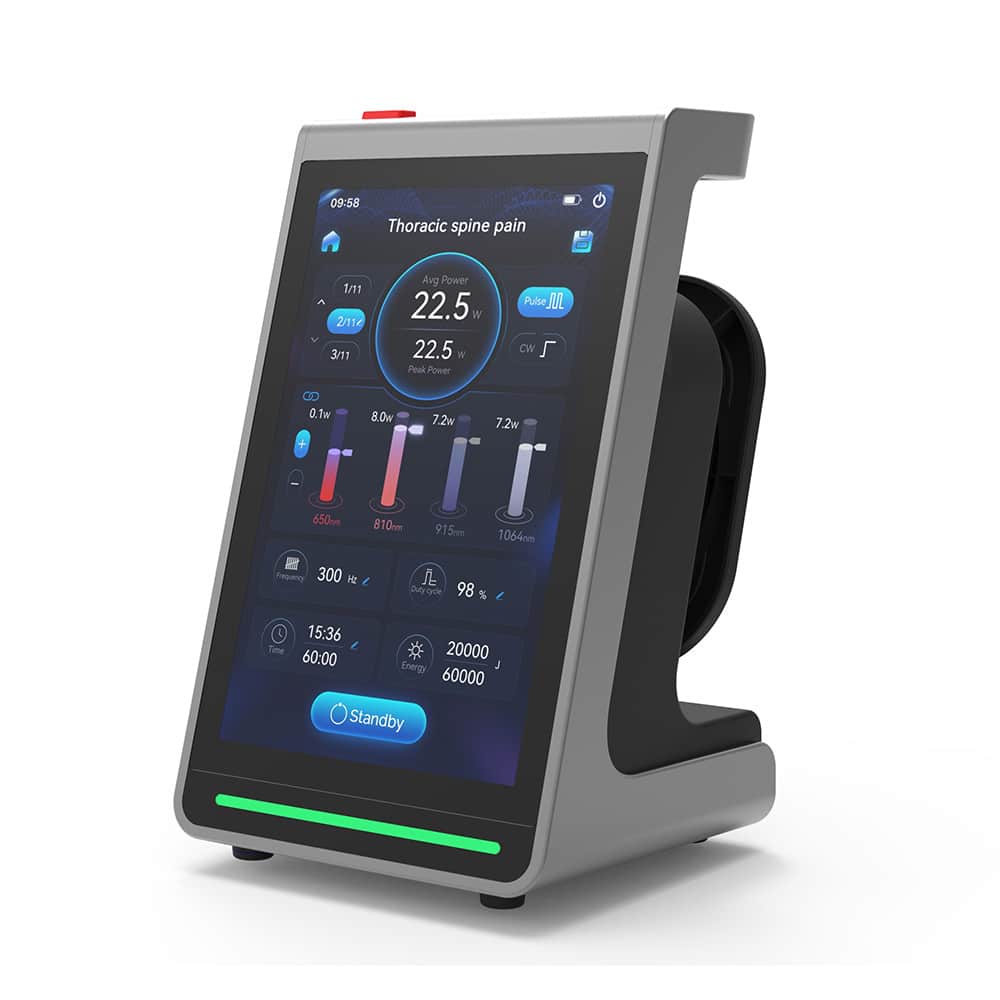
Explore Medray’s Class 4 Lasers
Medray’s Class 4 therapeutic lasers are designed to support circulation, tissue stimulation, and pain relief through a streamlined, repeatable workflow. Discover how laser therapy integrates seamlessly into busy clinics while providing a contact-free option for sensitive presentations.
Shockwave
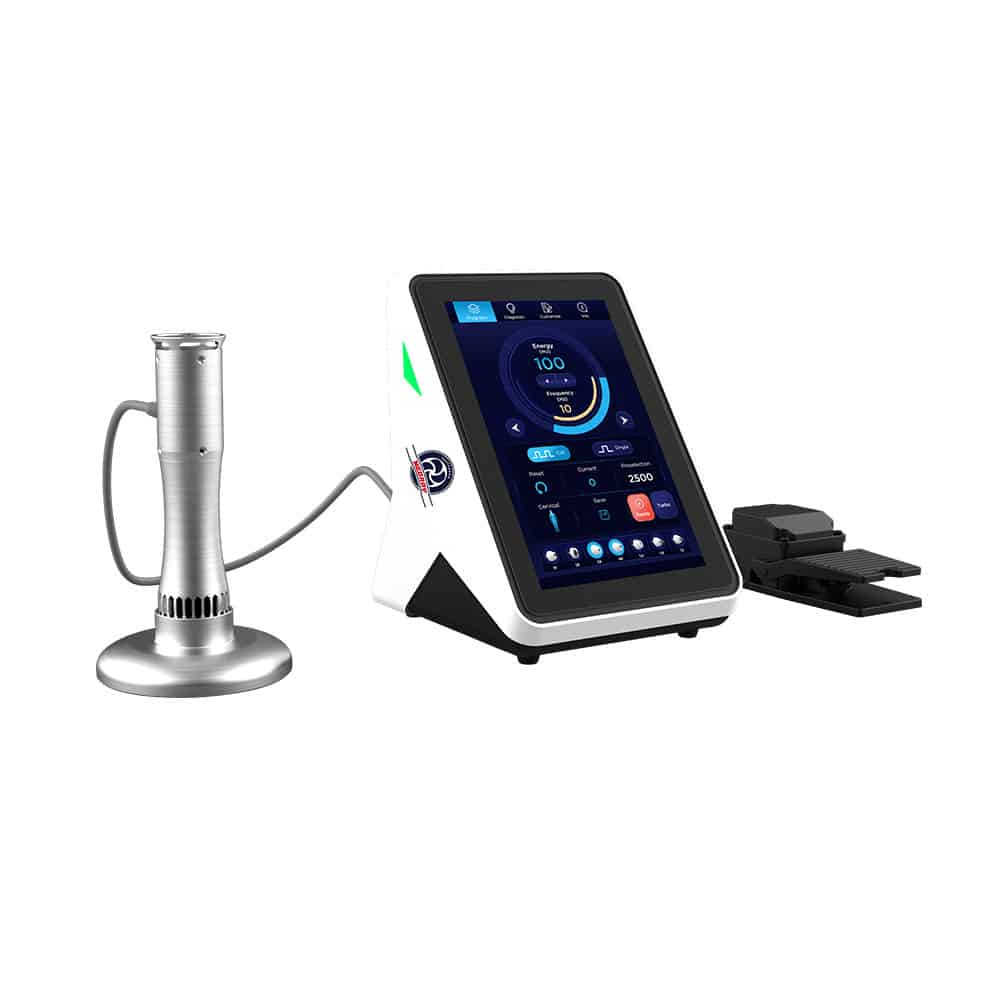
Explore Softshock 2.0 (RPW)
Clinical guidance for shockwave therapy implementation
Integrate Shockwave Therapy With Confidence
Medray Laser & Technology manufactures and distributes FDA-cleared medical devices designed to support circulation, tissue stimulation, and pain relief. Our products are intended for use by licensed healthcare professionals. While clinical research and practitioner experience support the use of laser and radial pressure wave (RPW) therapy in various applications, some uses described in this article may be considered off-label and are not explicitly cleared by the FDA. Patients should consult their healthcare provider to determine the best treatment for their individual needs. The information provided in this article is for educational purposes only and should not be considered medical advice or a substitute for consultation with a licensed medical professional.
Educational content is for licensed healthcare providers and may include discussion of clinical uses not cleared by the FDA. Provided for scientific exchange and not intended as promotional.
The FDA has cleared therapeutic lasers and shockwave devices for increasing circulation, tissue stimulation, and pain relief. Some of the use cases described in this article reflect how clinicians may apply shockwave therapy in practice, based on peer-reviewed research. This information is provided for educational purposes only and does not imply FDA clearance or approval for specific conditions.