
What Is Class 4 Laser Therapy?
Understanding the Basics of Class 4 Laser Therapy
- Penetrate deeper into tissue
- Deliver therapeutic energy more efficiently
- Treat larger areas in shorter periods of time
- Reach muscles, ligaments, tendons, and joints
How Does Class IV Laser Therapy Work?
-
Increased Cellular Energy (ATP Production)
Laser light stimulates mitochondria—the energy centers of cells—to produce more adenosine triphosphate (ATP). ATP fuels cellular repair, regeneration, and normal function.
-
Reduced Inflammation
Laser therapy has been shown to decrease pro-inflammatory markers and promote anti-inflammatory responses, helping reduce swelling and tissue irritation.
-
Improved Circulation
Light energy promotes vasodilation and microcirculation, increasing oxygen and nutrient delivery to injured tissue while helping remove metabolic waste.
-
Accelerated Tissue Repair
Studies show laser therapy supports fibroblast activity, collagen synthesis, and tissue remodeling, which are essential for healing muscles, tendons, and ligaments.
-
Pain Reduction
Laser therapy helps reduce pain through several pathways:
- Decreasing nerve sensitivity
- Reducing inflammation-related pressure
- Encouraging the release of endorphins
Common Conditions Treated with Class 4 Laser Therapy
Common clinical areas where class 4 laser therapy is used:
- Joint Pain
- Knee pain
- Shoulder pain
- Hip pain
- Arthritis
- Soft Tissue Injuries
- Sprains and strains
- Tendonitis and tendinopathy
- Ligament injuries
- Muscle tears
- Spine Conditions
- Neck pain
- Lower back pain
- Disc-related discomfort
- Chronic Conditions
- Plantar fasciitis
- Carpal tunnel syndrome
- Frozen shoulder
- Post-Surgical Recovery
- Incision healing
- Scar tissue management
- Swelling reduction
- Neurological Symptoms
- Nerve irritation
- Peripheral neuropathy
What Happens During a Class 4 Laser Treatment?
-
Protective eyewear is worn by both patient and clinician.
-
A handheld laser device is moved over the treatment area.
-
Patients often feel a gentle warmth or soothing sensation.
-
Sessions usually last between 5–15 minutes depending on the area treated.
What Makes Class IV Lasers Different?
- Deeper tissue penetration
- Faster treatment times
- Higher energy delivery
- Greater ability to treat large muscle groups and joints
Class 4 Laser Therapy in Human and Veterinary Medicine
- Osteoarthritis in dogs
- Post-operative healing
- Tendon and ligament injuries in horses
- Wound care
The Role of Laser Therapy in Modern Medicine
- Targets the root cause of pain
- Stimulates natural repair processes
- Supports faster recovery
- Can be combined with other therapies
Final Thoughts on Class 4 Laser Therapy
References
- Hamblin MR. Photobiomodulation or low-level laser therapy. J Biophotonics. 2016;9(11–12):1122–1124.
- Hamblin MR, Demidova TN. Mechanisms of low level light therapy. Proc SPIE. 2006;6140.
- Chung H, Dai T, Sharma S, Huang Y, Carroll J, Hamblin MR. The nuts and bolts of low-level laser therapy. Ann Biomed Eng. 2012;40(2):516–533.
- Karu T. Primary and secondary mechanisms of action of visible to near-infrared radiation on cells. J Photochem Photobiol B. 1999;49(1):1–17.
- Passarella S, Karu T. Absorption of monochromatic and narrow band radiation in the visible and near IR by cytochrome c oxidase and its role in photobiomodulation. J Photochem Photobiol B. 2014;140:344–358.
- Bjordal JM, Johnson MI, Iversen V, Aimbire F, Lopes-Martins R. Low-level laser therapy in acute pain: A systematic review of possible mechanisms of action and clinical effects. Photomed Laser Surg. 2006;24(2):158–168.
- Aimbire F, et al. Low-level laser therapy induces dose-dependent reduction of TNF-α levels in acute inflammation. Photomed Laser Surg. 2006;24(1):33–37.
- Hode L, Tunér J. Low level laser therapy: clinical practice and scientific background. Prima Books AB. 2014.
- de Freitas LF, Hamblin MR. Proposed mechanisms of photobiomodulation. IEEE J Sel Top Quantum Electron. 2016;22(3).
- Enwemeka CS, Parker JC, Dowdy DS, et al. The efficacy of low-power lasers in tissue repair and pain control: A meta-analysis study. Photomed Laser Surg. 2004;22(4):323–329.
- Medrado AR, Pugliese LS, Reis SR, Andrade ZA. Influence of low level laser therapy on wound healing and its biological action upon myofibroblasts. Lasers Surg Med. 2003;32(3):239–244.
- Chow R, et al. Efficacy of low-level laser therapy in the management of neck pain: A systematic review and meta-analysis. Lancet. 2009;374(9705):1897–1908.
- Bjordal JM, et al. Low-level laser therapy for tendinopathy. Phys Ther Rev. 2003;8(2):91–99.
- Alayat MS, et al. High-intensity laser therapy in the treatment of chronic low back pain. Lasers Med Sci. 2014;29(3):1065–1073.
- Angelova A, Ilieva E. Effectiveness of high intensity laser therapy for reduction of pain in knee osteoarthritis. Pain Res Manag. 2016.
- Ryan T, et al. Effect of laser therapy on pain and function in dogs with osteoarthritis. Front Vet Sci. 2018.
- Looney AL, et al. Photobiomodulation therapy in veterinary medicine. Vet Clin North Am Small Anim Pract. 2018.
Explore our Class 4 Lasers and Shockwave Therapy Device
Laser
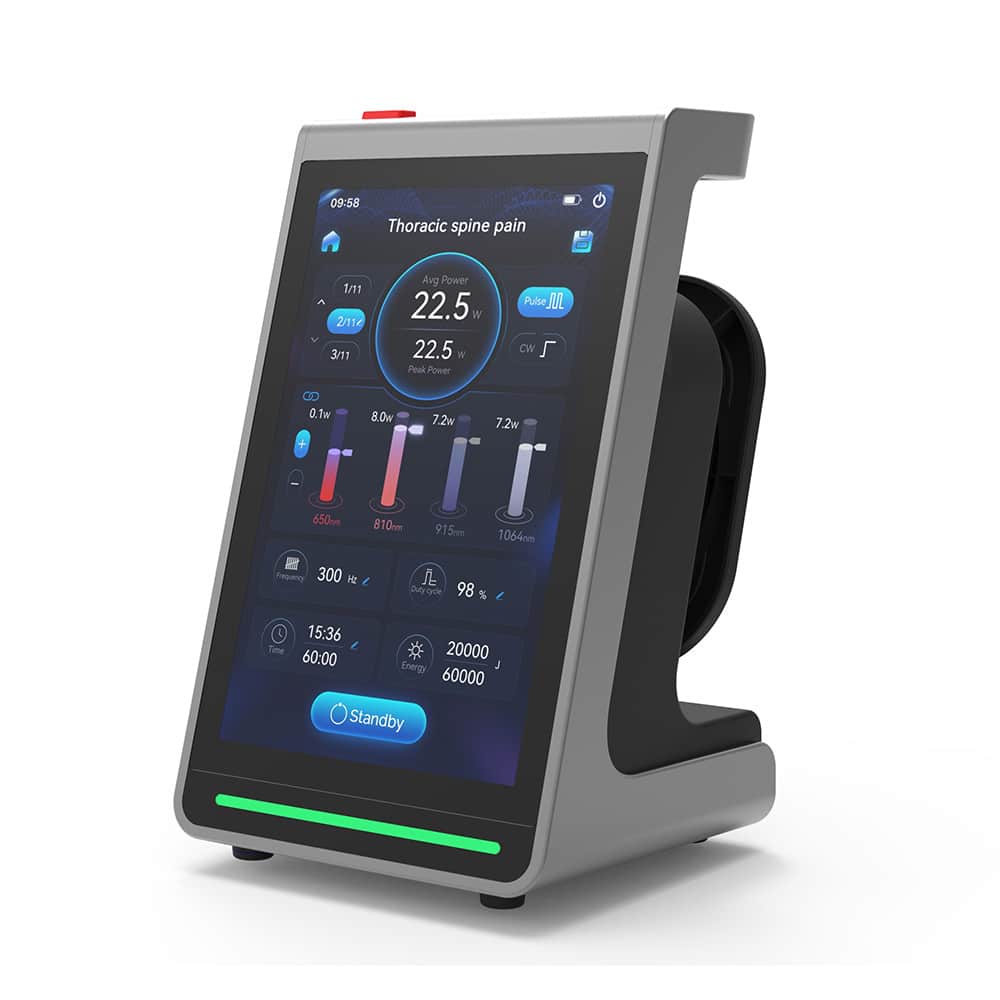
Explore Medray’s Class 4 Lasers
Medray’s Class 4 therapeutic lasers are designed to support circulation, tissue stimulation, and pain relief through a streamlined, repeatable workflow. Discover how laser therapy integrates seamlessly into busy clinics while providing a contact-free option for sensitive presentations.
Shockwave
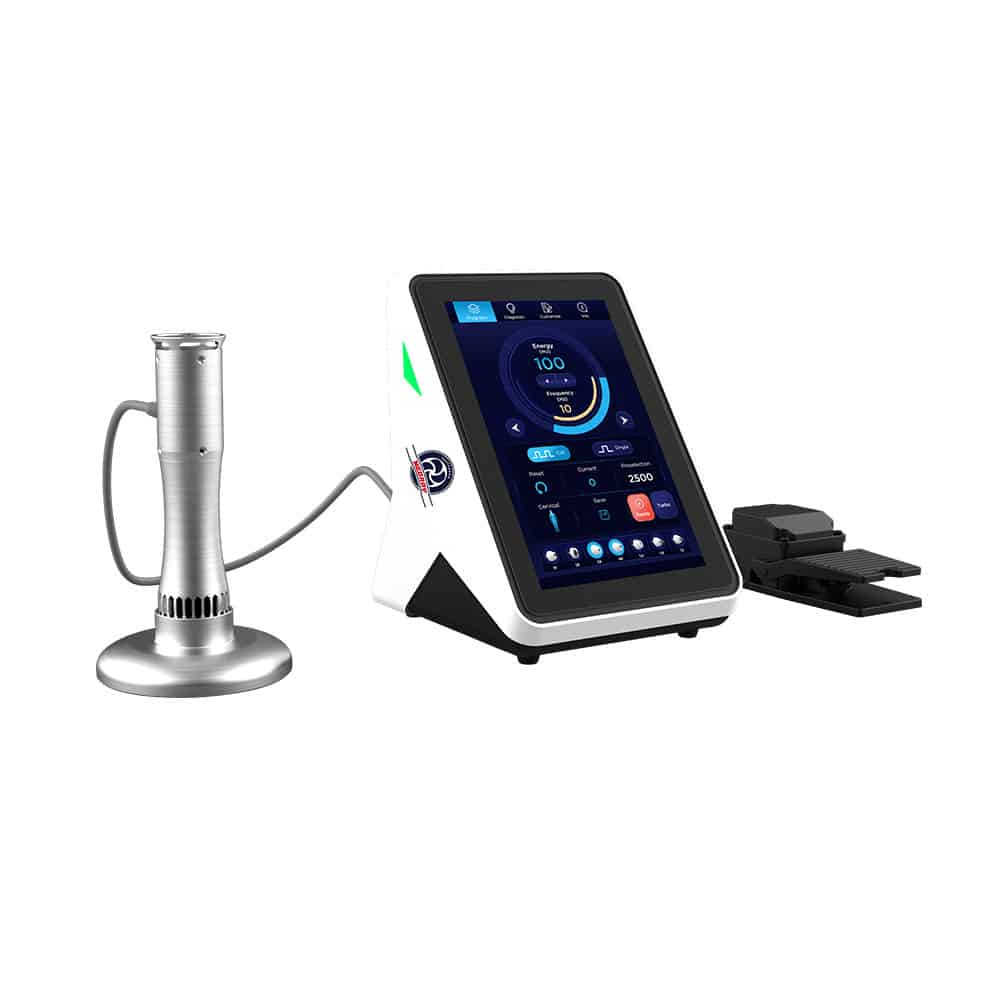
Explore Softshock 2.0 (RPW)
Clinical guidance for laser therapy implementation
Apply Class IV Laser Therapy With Confidence
Medray Laser & Technology manufactures and distributes FDA-cleared medical devices designed to support circulation, tissue stimulation, and pain relief. Our products are intended for use by licensed healthcare professionals. While clinical research and practitioner experience support the use of laser and radial pressure wave (RPW) therapy in various applications, some uses described in this article may be considered off-label and are not explicitly cleared by the FDA. Patients should consult their healthcare provider to determine the best treatment for their individual needs. The information provided in this article is for educational purposes only and should not be considered medical advice or a substitute for consultation with a licensed medical professional.
Educational content is for licensed healthcare providers and may include discussion of clinical uses not cleared by the FDA. Provided for scientific exchange and not intended as promotional.
The FDA has cleared therapeutic lasers and shockwave devices for increasing circulation, tissue stimulation, and pain relief. Some of the use cases described in this article reflect how clinicians may apply shockwave therapy in practice, based on peer-reviewed research. This information is provided for educational purposes only and does not imply FDA clearance or approval for specific conditions.