
Why Sports Medicine Workflows Need Efficient Laser Delivery
Sports medicine clinicians face a unique challenge. They are not simply treating injuries. They are managing athletes through a process that includes recovery, rehabilitation, movement restoration, performance progression, and return to participation.
Within this environment, treatment efficiency matters just as much as treatment selection.
High intensity laser therapy has become a valuable adjunct in many sports medicine settings because it may support increased circulation, tissue stimulation, temporary pain relief, and improved tolerance to subsequent rehabilitation. The question for many clinics is no longer whether laser therapy has a role, but how it can be delivered in a way that fits the pace and structure of modern sports medicine care.
This is where hands free laser therapy is changing the conversation.
Why Is Hands Free Laser Therapy Relevant in Sports Medicine?
Sports medicine clinics operate differently than many traditional healthcare settings.
Athletes are often seen repeatedly throughout a rehabilitation process, sometimes several times per week. Providers may be managing multiple patients simultaneously, each progressing through different stages of care.
Within this environment, efficiency is essential.
Hands free laser therapy allows treatment to be delivered while clinicians continue with other important aspects of care, including:
- Reassessment
- Manual therapy
- Corrective exercise instruction
- Movement analysis
- Return to play progression
Rather than requiring continuous device management, treatment becomes part of a larger clinical workflow.
This allows laser therapy to integrate more naturally into the rehabilitation process.
Does Hands Free Delivery Change the Purpose of Laser Therapy?
No.
The goals of laser therapy remain consistent regardless of how treatment is delivered.
Clinicians commonly incorporate laser therapy to support:
- Increased circulation
- Tissue stimulation
- Temporary pain relief
- Tissue recovery
- Improved tolerance to rehabilitation activities
The difference lies in how efficiently and consistently these treatments can be incorporated into a comprehensive care plan.
Hands free delivery does not change the biological mechanisms associated with photobiomodulation. It simply changes how treatment fits within a busy sports medicine environment.
How Can Hands Free Laser Therapy Support Shoulder Rehabilitation?
Shoulder complaints in athletes are rarely isolated to a single structure.
Clinicians frequently encounter combinations of:
- Rotator cuff related symptoms
- Long head biceps irritation
- Scapular control deficits
- Posterior shoulder restrictions
- Thoracic mobility limitations
- Cervical contributions
- Scapular stabilization
- Movement retraining
- Thoracic mobility work
- Manual therapy
- Functional assessment
What Role Can Hands Free Laser Therapy Play in Knee Rehabilitation?
- Patellar tendon irritation
- Quadriceps tendon overload
- Patellofemoral discomfort
- Postoperative sensitivity
- Periarticular soft tissue irritation
- Quadriceps activation
- Movement mechanics
- Exercise progression
- Loading strategies
- Functional performance
Why Is Hands Free Laser Well Suited for Low Back Conditions?
Low back complaints in athletic populations often involve multiple contributing factors.
These may include:
- Paraspinal tissue irritation
- Thoracolumbar fascial involvement
- Posterior pelvic contributions
- Segmental sensitivity
- Movement dysfunction
Managing these presentations often requires a sequence of interventions rather than a single treatment.
Hands free laser therapy can be incorporated while clinicians perform:
- Functional reassessments
- Mobility interventions
- Exercise instruction
- Spinal decompression preparation
- Movement correction strategies
How Can Sports Medicine Clinics Use Hands Free Laser Therapy for Foot and Ankle Conditions?
Foot and ankle complaints are common among active individuals and athletes.
Clinicians frequently manage presentations such as:
- Plantar heel pain
- Plantar fascia overload
- Achilles related complaints
- Running related foot discomfort
- Training volume related tissue stress
These conditions often involve broader movement and loading patterns rather than a single painful structure.
Hands free laser therapy can provide regional treatment while clinicians address:
- Calf mobility
- Foot intrinsic activation
- Running mechanics
- Balance training
- Return to sport progression
How Does Hands Free Laser Therapy Improve Consistency?
One of the most overlooked advantages of hands free delivery is reproducibility.
Manual laser application naturally introduces variation through factors such as:
- Movement speed
- Coverage patterns
- Contact pressure
- Provider technique
In sports medicine settings where athletes may receive frequent treatment or be seen by multiple providers, consistency becomes increasingly important.
Hands free systems help standardize treatment delivery across sessions, creating a more reproducible experience over the course of care.
This can be particularly valuable when rehabilitation depends on repeated exposure and progressive improvement.
Is Hands Free Laser Therapy Replacing Clinical Expertise?
Not at all.
Hands free laser therapy should be viewed as a clinician extender rather than a replacement for clinical skill.
The concept is similar to other rehabilitation technologies that allow treatment to occur while providers focus their attention elsewhere.
Clinical decision making remains essential.
Providers must still determine:
- Appropriate treatment regions
- Treatment timing
- Integration within the rehabilitation plan
- Progression criteria
- Patient specific goals
Is Manual Laser Therapy Still Valuable?
Absolutely.
Manual laser therapy continues to have an important role in situations where:
- Treatment targets are highly specific
- Coverage requires ongoing adjustment
- Tissue response needs to be monitored closely
- Precision is the primary objective
Hands free delivery should be viewed as an additional application model rather than a replacement.
The choice between manual and hands free treatment should be based on:
- Anatomy being treated
- Clinical goals
- Workflow requirements
- Patient presentation
The Future of Laser Therapy in Sports Medicine
Sports medicine continues to evolve toward more integrated and efficient models of care.
Athletes expect comprehensive treatment plans that combine:
- Rehabilitation
- Recovery strategies
- Movement optimization
- Performance progression
- Return to participation planning
Hands free laser therapy supports this model by allowing one component of care to occur while the clinician continues addressing the many other factors involved in athletic recovery.
Its value extends beyond the technology itself.
It lies in the ability to provide consistent regional treatment, preserve clinician time, and improve integration within a modern sports medicine workflow.
For clinics managing shoulder dysfunction, knee complaints, low back conditions, foot pain, and other common athletic presentations, hands free laser therapy represents an important evolution in how conservative care can be delivered efficiently and effectively.
Explore our Class 4 Lasers and Shockwave Therapy Device
Laser
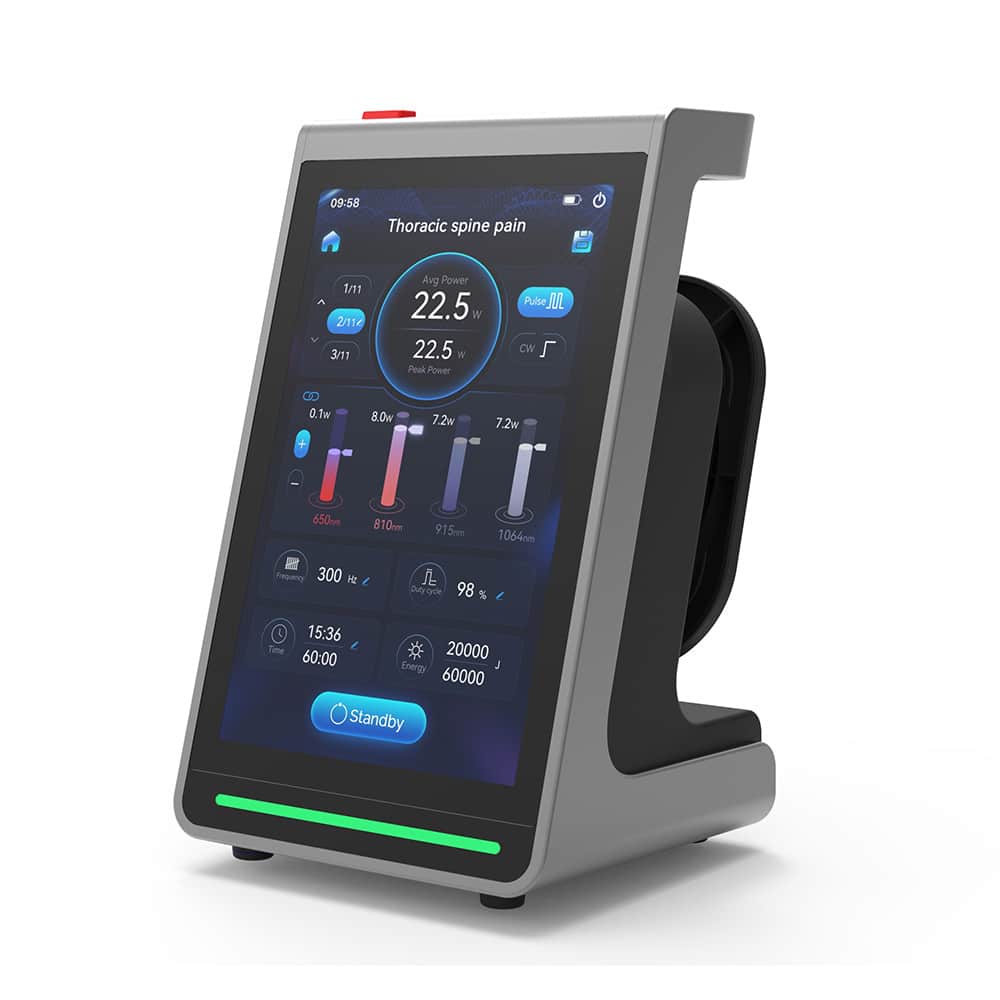
Explore Medray’s Class 4 Lasers
Medray’s Class 4 therapeutic lasers are designed to support circulation, tissue stimulation, and pain relief through a streamlined, repeatable workflow. Discover how laser therapy integrates seamlessly into busy clinics while providing a contact-free option for sensitive presentations.
Shockwave
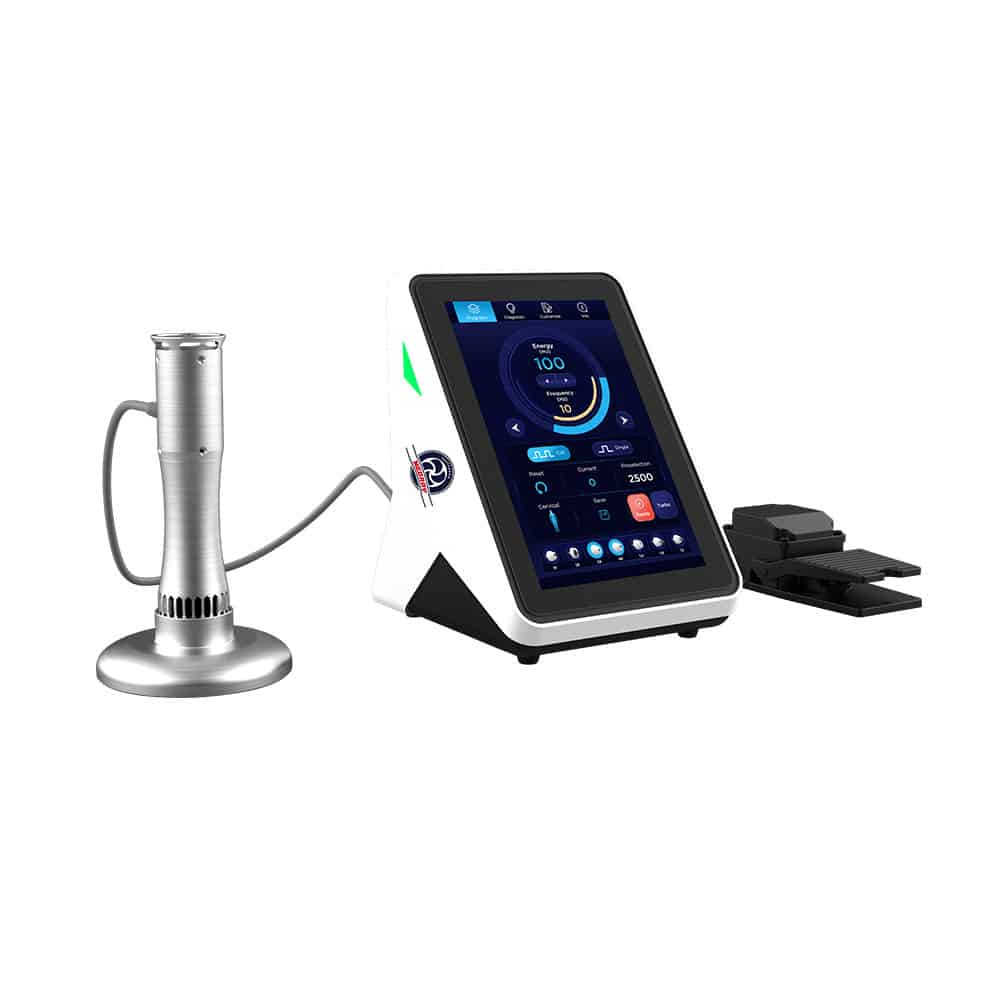
Explore Softshock 2.0 (RPW)
Clinical guidance for hands free laser therapy in sports medicine
Support Sports Medicine Workflows With Hands Free Laser Therapy
Hands free laser therapy can help sports medicine clinics integrate regional treatment into busy rehabilitation workflows while preserving clinician focus on reassessment, movement instruction, manual therapy, and return-to-participation planning. Medray helps clinicians understand how hands free Class IV laser delivery may support consistency, workflow efficiency, and treatment integration in athletic care environments. Call us at (573) 745-1086 or visit our Contact Us page to discuss evidence-aligned laser therapy strategies for your practice.