
Improve movement. Reduce irritability. Support faster progression.
Class IV laser therapy is used in physical therapy to support tissue response, improve patient tolerance for movement, and help clinicians progress care more efficiently within rehabilitation-focused plans.
In busy outpatient settings, Physical Therapists need solutions that integrate seamlessly into existing workflows—supporting both clinical outcomes and operational efficiency. Class 4 laser therapy provides a non-invasive, drug-free modality that can be incorporated alongside therapeutic exercise, manual therapy, and functional training without disrupting established plans of care.
As physical therapy clinics continue to evolve beyond traditional insurance constraints, many providers are incorporating cash-based, non-covered services that align with patient demand and clinical value. Class IV laser therapy is increasingly used as part of this shift—supporting both patient outcomes and practice growth.
How Class 4 lasers work in physical therapy settings
Class 4 laser therapy systems used in physical therapy deliver specific light wavelengths—typically red (600–700 nm) and near-infrared (780–1100 nm)—to targeted tissue areas as part of rehabilitation-focused care. This light energy is absorbed by cells and interacts with biological processes commonly supported during physical therapy treatment sessions, including:
-
Interaction with ATP-related cellular processes
-
Enhanced local circulation supporting tissue oxygenation
-
Modulation of inflammatory processes at the cellular level
-
Support for tissue response in muscles, ligaments, and neural structures
-
Improved tolerance for movement during rehabilitation and functional training
In physical therapy settings, Class 4 laser therapy is typically integrated alongside therapeutic exercise, manual therapy, and functional interventions—serving as a complementary modality rather than a standalone treatment.
Common conditions addressed in physical therapy with Class 4 laser therapy
Physical Therapists incorporate Class 4 laser therapy as a complementary modality within rehabilitation-focused care plans to support a wide range of musculoskeletal and recovery-related conditions, including:
- Plantar heel pain conditions, including plantar fasciitis
- Tendon-related conditions, including tendinitis and tendinopathy
- Rotator cuff–related shoulder pain and dysfunction
- Lateral elbow pain conditions, including tennis elbow (lateral epicondylitis)
- Inflammatory soft tissue conditions such as bursitis
- Achilles tendon pain and related overuse injuries
- Back and neck conditions commonly managed in physical therapy settings
- Myofascial and soft tissue–related pain patterns
- Muscle strains and ligament sprains
- Joint-related conditions, including osteoarthritis
- Post-operative rehabilitation and recovery support
Our lineup of FDA-cleared Class 4 laser systems for physical therapy

QuantumX
Precision-engineered Class IV laser for physical therapy care
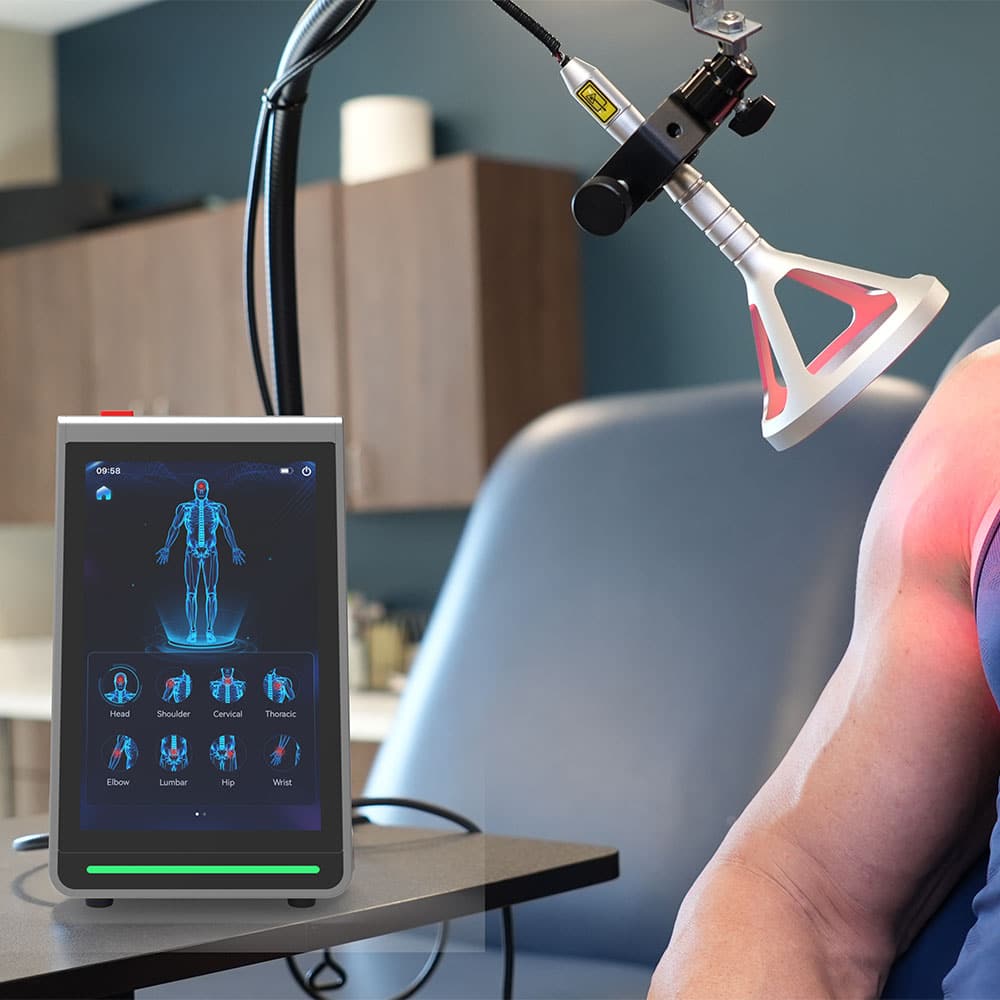
Deliver consistent performance with QuantumX—our 45W quad-wavelength Class IV laser designed for physical therapy environments. Features a 10.1″ touchscreen and hands-free therapy options to support efficient integration into rehabilitation workflows and active treatment sessions.
Disclaimer
Medray QuantumX is FDA-cleared for pain relief, circulation enhancement, and tissue stimulation. The conditions described are included for educational purposes based on research and clinical usage.

Quad
Core physical therapy performance with 4-wavelength flexibility
Disclaimer
A clinical and operational solution for modern physical therapy
Class IV laser therapy is used in physical therapy as a complementary modality to support tissue response, manage inflammation-related symptoms, and improve patient tolerance for active rehabilitation.
Rather than functioning as a standalone treatment, laser therapy is integrated into rehabilitation-focused care plans to support movement, progression, and functional outcomes.
In outpatient physical therapy environments, clinicians must balance patient care with operational efficiency. Class 4 laser therapy allows treatment to be delivered within standard visit durations while supporting broader rehabilitation goals.
Medray designs Class 4 laser systems specifically for physical therapy settings—supporting integration into therapeutic exercise, manual therapy, and functional rehabilitation workflows without disrupting established plans of care.
Why Physical Therapists integrate Class 4 laser therapy
-
Support functional progression
Laser therapy is commonly used to improve patient tolerance for movement, allowing clinicians to advance therapeutic exercise and functional training more effectively.
-
Enhance patient experience
Non-invasive, drug-free application supports patient comfort, particularly in cases where sensitivity or irritability may limit participation in care.
-
Integrate without disrupting workflow
Laser therapy sessions can be delivered within standard visit durations, fitting naturally into existing rehabilitation workflows.
-
Expand service offerings
Many physical therapy clinics are incorporating cash-based, non-covered services as part of evolving care models. Laser therapy can support this transition while aligning with patient-centered care approaches.
-
Support clinical consistency
High-power systems allow treatment of deeper or broader anatomical areas within practical timeframes, supporting consistency across patient populations.
Class IV Laser Therapy for Physical Therapists
High-power laser therapy systems designed to integrate into modern physical therapy and rehabilitation workflows.
Physical therapy clinics increasingly rely on Class IV laser therapy as a non-invasive modality to support tissue response, manage inflammation-related symptoms, and improve patient tolerance for active rehabilitation. Medray provides Class IV laser therapy systems built for outpatient physical therapy environments, where efficiency, safety, and clinical integration matter.
Our laser systems are used by Physical Therapists across orthopedic, sports, and post-operative rehabilitation settings to complement therapeutic exercise and manual interventions—not replace them.
Physical therapy laser integrations for expanded clinical flexibility
Enhance each Medray laser system with integration options designed to support a wider range of physical therapy workflows. Medray Class 4 laser systems can be paired with the Softshock 2.0 radial pressure wave device, the patented S.T.A.R. Hands-Free Therapy System, and our Dual Technology Therapy configuration, allowing Physical Therapists to tailor modality use based on patient needs, treatment goals, and clinic operations.
These integration options are intended to complement therapeutic exercise, manual therapy, and rehabilitation-focused plans of care—providing greater flexibility, streamlined workflows, and expanded clinical application without disrupting established physical therapy practices.

Softshock 2.0 Radial Pressure Wave
Add shockwave therapy as a complementary modality. Integrate our advanced Softshock 2.0 radial pressure wave device alongside Class IV laser therapy to support physical therapy treatment plans. This technology is commonly incorporated into rehabilitation-focused care for soft tissue, tendon-related, and musculoskeletal conditions where mechanical stimulation may support tissue response.
Disclaimer

S.T.A.R. Hands-Free Therapy System

Dual Therapy
Dual Therapy combines Class IV laser therapy with radial pressure wave technology into a single integrated protocol approach. This configuration allows Physical Therapists to coordinate multiple modalities within rehabilitation-focused care plans, supporting flexible application based on patient presentation and clinical objectives. The combined approach may help clinicians address both tissue healing and mechanical stimulation needs during musculoskeletal rehabilitation.
FAQs
What Is Class 4 Laser Therapy in Physical Therapy?
Class 4 laser therapy is a form of high-power photobiomodulation used in physical therapy to support tissue response, improve patient tolerance for movement, and assist clinicians in progressing rehabilitation programs. In physical therapy settings, this technology is used as an adjunct modality to support tissue response and patient comfort during rehabilitation.
Unlike low-level (cold) lasers, Class 4 systems deliver higher output levels that allow treatment of deeper tissue structures within practical clinical timeframes. This makes them well suited for busy PT clinics where laser therapy must fit naturally into established plans of care.
In physical therapy, laser therapy is commonly integrated:
- Before therapeutic exercise to facilitate movement
- After activity to support post-exercise tissue response
- Alongside manual therapy and rehabilitation protocols
What is a Class 4 physical therapy laser device?
Class 4 lasers—also referred to as high-power laser therapy or photobiomodulation therapy—are therapeutic devices used by Physical Therapists as an adjunct modality within rehabilitation-focused care. A Class 4 physical therapy laser is a high-powered system designed to deliver therapeutic light energy to targeted tissue as part of a broader plan of care that includes therapeutic exercise, manual therapy, and functional rehabilitation.
These laser systems emit concentrated light energy, typically in the red and near-infrared spectrum, with power outputs above 0.5 watts. This higher output allows the light to reach deeper tissue structures such as muscles, tendons, ligaments, and joints—areas commonly addressed during physical therapy treatment. The underlying mechanism, known as photobiomodulation (PBM), involves the interaction of light with cellular processes that may support tissue response and recovery when used appropriately.
Compared to lower-powered Class III laser devices, Class 4 laser systems allow Physical Therapists to treat deeper anatomical regions within practical clinical timeframes, making them well suited for outpatient rehabilitation environments where efficiency and workflow integration are important.
In physical therapy settings, Class 4 laser therapy is commonly used to support tissue response, local circulation, and patient tolerance for movement during rehabilitation. Treatments are non-invasive and drug-free, allowing Physical Therapists to incorporate laser therapy alongside active and passive interventions without disrupting established care plans.
Photobiomodulation therapy—the process by which Class 4 lasers operate—is used in physical therapy as a supportive modality rather than a standalone treatment. By delivering concentrated red and near-infrared light to targeted areas, these systems are integrated into rehabilitation programs focused on supporting functional recovery, improving movement capacity, and aiding rehabilitation without the use of surgery, injections, or pharmaceutical interventions.
Why Physical Therapy Clinics Choose Class 4 Laser Systems
Physical therapy clinics choose Class 4 laser therapy systems when they need a modality that aligns with clinical realities, not just technical specifications.
-
Practical integration
Laser therapy sessions can be delivered efficiently within standard PT visit durations without disrupting patient flow.
-
Support for active rehabilitation
By supporting comfort and tissue response, laser therapy is commonly used to help patients better participate in therapeutic exercise and functional training.
-
Non-invasive modality
Laser therapy offers a drug-free, non-invasive option that fits well within conservative care models.
-
Clinic efficiency
Higher-power systems allow treatment of larger or deeper areas in shorter timeframes compared to low-level alternatives.
How Physical Therapists Use Class 4 Laser Therapy
-
- Support tissue response during rehabilitation phases
- Improve patient tolerance for movement and loading
- Assist with inflammation-related symptom management during recovery
- Complement active and passive therapeutic interventions
Ready to Add Class 4 Laser to Your Physical Therapy Practice?
What physical therapists can expect
Efficient session timing:
Customizable protocols:
Seamless integration:
Positive patient experience:
Practice efficiency considerations:
Competitive pricing — no hidden costs
Get the Class 4 laser performance you need—without overpaying.
Medray offers competitive Class 4 laser therapy pricing designed for physical therapy clinics, with clear, straightforward quotes and no inflated markups. Invest in FDA-cleared technology used in rehabilitation settings nationwide—priced to align with real clinic workflows, patient volumes, and long-term practice needs.
Why choose Class 4 lasers for physical therapy clinics?
Our Class 4 laser therapy systems are used by physical therapy clinics nationwide for their durability, performance consistency, and ability to integrate into rehabilitation-focused workflows. Medray Laser & Technology designs FDA-cleared laser systems specifically for physical therapy environments, supporting active rehabilitation, clinical efficiency, and flexible care delivery.
Our Class 4 laser systems for physical therapy feature:
- Attended treatment options for hands-on application during rehabilitation sessions
- Unattended, hands-free configurations to support multitasking and workflow efficiency
- Configurable software presets aligned with common physical therapy applications
- Ergonomic applicators to support clinician comfort during repeated use
- Portable, compact designs suitable for multi-room and multi-provider clinics
- Ongoing training and support to promote safe use and long-term integration
What are the benefits of Class 4 laser therapy in physical therapy care?
Class 4 laser therapy offers a range of practical benefits that make it a commonly used adjunct modality in physical therapy and rehabilitation settings:
- Non-invasive modality: No needles or surgical intervention, allowing integration into conservative physical therapy plans of care
- Comfortable application: Laser therapy is generally well tolerated, with many patients describing a mild warming or soothing sensation during treatment
- Efficient care delivery: Laser therapy sessions are generally brief, allowing Physical Therapists to incorporate treatment within standard visit durations
- Safety-focused use: When applied in accordance with established protocols, Class 4 laser therapy is associated with a low risk profile in clinical settings
- Scalable workflow options: Hands-free configurations allow laser therapy to be delivered without continuous clinician contact, supporting efficient use in busy physical therapy clinics
- Billing and payment considerations: Depending on setting and payer guidelines, laser therapy may be offered as a cash-based service or incorporated into broader care models at the provider’s discretion.
Musculoskeletal areas commonly addressed in physical therapy using Class 4 laser therapy
Class 4 laser therapy is used by Physical Therapists as a supportive, non-invasive modality within rehabilitation-focused plans of care. In physical therapy settings, laser therapy is typically integrated alongside therapeutic exercise, manual therapy, and functional training to support tissue response and improve tolerance for movement during rehabilitation.
Below are common anatomical regions where Physical Therapists may incorporate Class 4 laser therapy based on clinical judgment, patient presentation, and rehabilitation goals.
Foot & Heel
-
Plantar fascia–related conditions: Heel and arch discomfort associated with soft tissue irritation.
-
Forefoot nerve sensitivity: Including presentations such as Morton’s neuroma and localized nerve-related discomfort.
-
Ligament strain and soft tissue irritation: Involving connective tissue structures of the foot.
Ankle and Lower Leg
- Physical Therapists may integrate Class IV laser therapy into rehabilitation plans involving:
-
Chronic ankle symptoms: Including post-sprain sensitivity or degenerative presentations.
-
Achilles tendon–related conditions: Tendon irritation or load-related tissue response.
-
Retrocalcaneal bursitis: Posterior heel discomfort associated with bursal irritation.
-
Calf muscle strain: Gastrocnemius or soleus involvement from overuse or mechanical loading.
Knee
- Class IV laser therapy may be used as an adjunct modality in physical therapy care addressing:
-
Patellar tendon–related conditions: Including overuse or load-related presentations affecting anterior knee structures.
-
Iliotibial band–related symptoms: Common in repetitive loading activities such as running.
-
Medial or lateral ligament sprains: Conservative management within structured rehabilitation programs.
-
Insertional soft tissue discomfort: At tendon or ligament attachment sites around the knee.
Upper Leg
- Physical therapy use of Class IV laser therapy may include support for:
-
Quadriceps strain: Overstretching or overload of anterior thigh musculature.
-
Hamstring injuries: Load-related strain patterns associated with sprinting or lifting.
Hip and Pelvis
- Physical Therapists may incorporate Class IV laser therapy within rehabilitation-focused care plans for:
-
Gluteal muscle strain: Overuse or tensile loading of posterior hip musculature.
-
Hip flexor tendon–related conditions: Often associated with repetitive hip flexion activities.
-
Trochanteric or iliopsoas bursitis: Soft tissue irritation contributing to anterior or lateral hip symptoms.
Elbow and Forearm
- In physical therapy settings, Class IV laser therapy may support rehabilitation addressing:
-
Lateral epicondylitis: Tendon-related symptoms from repetitive gripping or wrist extension.
-
Medial epicondylitis: Inner elbow tendon sensitivity from throwing or repetitive use.
-
Insertional tendon conditions: Involving the biceps or triceps near the elbow.
Shoulder
- Class IV laser therapy may be integrated into physical therapy programs addressing:
-
Rotator cuff tendon involvement: Partial tears or degenerative presentations affecting shoulder stability.
-
Calcific tendinitis: Calcium deposits within rotator cuff tendons.
-
Biceps tendon–related symptoms: Irritation involving the long head of the biceps.
Hand and Wrist
- Physical Therapists may use Class IV laser therapy as a complementary modality in rehabilitation plans for:
-
Tendon and ligament strain: Associated with repetitive use or occupational loading of the hand and wrist.
- Overuse-related conditions: Common in racquet sports, weightlifting, or repetitive task environments.
Physical therapy Class 4 laser therapy pricing & purchasing options
Looking for Class 4 laser therapy systems for your physical therapy clinic? Medray offers flexible purchasing options designed to support outpatient rehabilitation environments of varying sizes and care models. We help Physical Therapists evaluate technology based on workflow fit, clinical integration, and long-term operational considerations. Contact us to discuss Class 4 laser therapy pricing and purchasing details tailored to physical therapy settings.
Pricing: Competitive pricing with transparent quotes, tailored to physical therapy clinic needs
Financing: Financing options designed for both small practices and multi-location physical therapy clinics
Technology: Access to Medray’s hands-free laser delivery configurations to support efficient rehabilitation workflows
Consultation: In-clinic demonstrations and virtual consultations to review integration within physical therapy plans of care
Understanding Class 4 laser therapy pricing for physical therapy clinics
- Class IV laser therapy pricing can vary based on clinical needs, workflow preferences, and system configuration. Rather than offering one-size-fits-all pricing, Medray works with Physical Therapists to help evaluate options that align with rehabilitation-focused care models and day-to-day clinic operations. Below are the primary factors that typically influence Class IV laser therapy pricing in physical therapy settings.
- System power and configuration: Class IV laser systems are available in different power levels and configurations. Higher-power systems may allow treatment of larger or deeper anatomical areas within practical clinical timeframes, which can be an important consideration in busy outpatient rehabilitation environments.
- Attended vs. hands-free delivery options: Some physical therapy clinics prefer attended laser application as part of hands-on care, while others value hands-free configurations that allow therapists to focus on active rehabilitation during treatment sessions. Systems with hands-free capability may impact overall system configuration and pricing.
- Software features and protocol flexibility: Laser systems may include configurable software presets designed to support a range of rehabilitation-focused applications. Clinics may evaluate how preset flexibility aligns with their preferred treatment approaches and documentation practices.
- Integration options and attachments: Pricing may vary based on optional integration components, such as compatibility with hands-free delivery systems or future modality expansion. Clinics often consider whether they want a standalone laser system or a platform that supports additional treatment options over time.
- Training, onboarding, and ongoing support: Professional training, implementation support, and long-term technical service are important considerations for physical therapy clinics. Medray offers education and support resources designed to promote safe use, consistent implementation, and long-term system reliability.
- Financing and purchasing flexibility: Medray offers financing options designed to accommodate both small practices and multi-location physical therapy clinics. Payment structures may vary based on clinic size, purchasing timeline, and overall system configuration.
- A note on clinical decision-making: Pricing discussions are intended to support informed purchasing decisions. Selection of a Class IV laser system should be based on clinical appropriateness, workflow fit, and professional judgment—not on pricing alone.

Solutions for modern physical therapy care
Take the next step in advancing your rehabilitation services
Support your physical therapy practice with Class 4 laser therapy designed for rehabilitation-focused care. At Medray, we provide more than just technology—we work with Physical Therapists to support thoughtful integration of laser therapy into active rehabilitation, therapeutic exercise, and patient-centered plans of care.
Whether you’re managing post-operative rehabilitation, addressing musculoskeletal conditions, or evaluating ways to expand your clinic’s modality offerings, Medray Class 4 laser systems are built to complement physical therapy workflows with flexibility, efficiency, and long-term reliability.